
Setting your water heater to around 120°F is ideal for safety, energy savings, and proper sanitation. If it’s too high, you risk scalding burns, especially for kids and elderly. Too low, and bacteria like Legionella can grow, causing health issues. Adjust your thermostat carefully—turn off power first, set it to 120°F, then verify the temperature at a tap. Keep going to learn how to get the perfect balance for your household.

Get kitchen staples and gadgets delivered free — and shop member deals
- Fast, free delivery on millions of items
- Access to Prime Big Deal Days deals on October 6–7
- Prime Video, Amazon Music and more included
Key Takeaways
- The recommended water heater temperature setting is around 120°F to balance safety, sanitation, and energy efficiency.
- Setting above 120°F increases scalding risk, especially for children and seniors.
- Lower temperatures may lead to bacterial growth, posing health risks like Legionella.
- Adjust the thermostat safely by turning off power, then setting it to 120°F before turning it back on.
- Proper temperature control extends water heater lifespan, reduces energy bills, and prevents injuries.

Setting the right temperature on your water heater is essential for both safety and efficiency. When you choose the proper setting, you not only prevent potential hazards but also optimize energy consumption, saving you money in the long run. Many homeowners overlook this simple adjustment, but it can greatly impact your household’s safety and energy bills. A hot water heater set too high can pose safety concerns, especially if you have children or elderly family members. Scalding burns are a real risk if the water temperature exceeds 120°F, particularly in households with vulnerable individuals. Conversely, setting it too low might save energy, but it can lead to bacterial growth, such as Legionella, which thrives in lukewarm water and can cause serious health issues. Thus, finding a balance between safety and efficiency is vital.
Most experts recommend setting your water heater to around 120°F. At this temperature, you reduce the risk of scalding while maintaining effective sanitation. This setting is generally safe for most households and helps prevent accidental burns, especially in homes with small children or seniors who may be more sensitive to hot water. Additionally, maintaining the temperature at this level helps improve energy efficiency. When your water heater isn’t working harder to heat water to higher temperatures, it consumes less energy, which translates into lower utility bills. Properly setting the temperature can also extend the lifespan of your water heater, as it reduces unnecessary wear and tear caused by overheating. It’s also beneficial to understand the contrast ratio of your water heater, as higher contrast ratios can improve the clarity and quality of the hot water delivered.
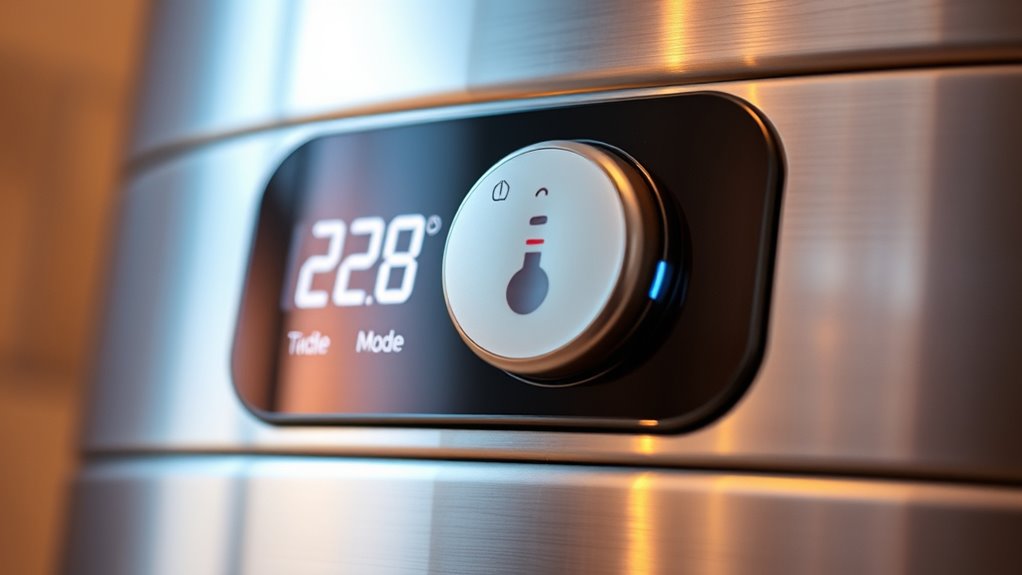
Adjusting your water heater’s thermostat is straightforward, but you should always exercise caution. Before making any changes, turn off the power supply to prevent accidental injury. Use a sturdy tool or a screwdriver to turn the thermostat dial to the recommended setting—usually marked around 120°F. After adjusting, turn the power back on and wait a few hours to allow the water to reach the new temperature. It’s a good idea to test the water temperature at a tap to verify it’s not too hot or too cold. If it feels too hot, lower the setting slightly; if it’s not warm enough, increase it gradually.
water heater temperature controller
As an affiliate, we earn on qualifying purchases.
As an affiliate, we earn on qualifying purchases.
Frequently Asked Questions
How Often Should I Check My Water Heater’s Temperature Setting?
You should check your water heater’s temperature setting at least once a year as part of your maintenance schedule. Regular checks guarantee it remains at a safe and efficient level, typically around 120°F. Always follow safety precautions, like turning off the power or gas supply before inspecting. Doing this helps prevent scalding, saves energy, and extends your water heater’s lifespan.
Can Adjusting Temperature Save Me Money on Energy Bills?
Adjusting your water heater’s temperature is like tuning a guitar; it can markedly boost your energy efficiency and save you money. Lowering the temperature to around 120°F reduces energy consumption without sacrificing comfort, leading to cost savings on your bills. Not only does this simple change make your system more efficient, but it also extends its lifespan, helping you cut costs in the long run while keeping your home cozy.
What Are the Signs My Water Heater Is Overheating?
If your water heater overheats, you might notice scalding risk, with water feeling unexpectedly hot or causing burns. You could also see signs of thermostat failure, like inconsistent water temperature or strange noises. Other indicators include leaks or corrosion around the tank. To prevent accidents, regularly check the temperature setting, and if you suspect overheating, turn off the heater and call a professional for inspection and repairs.
Is It Safe to Set the Temperature Below 120°F?
Yes, it’s safe to set your water heater below 120°F, but remember safety considerations and health risks. Lower temperatures reduce the risk of scalding injuries, especially for children and seniors, and can save energy. However, setting it too low might promote bacterial growth like Legionella. You should balance safety and health risks by choosing a temperature around 120°F, ensuring hot water is safe for use while minimizing scalding hazards.
How Does Water Heater Temperature Affect Sediment Buildup?
Lower water heater temperatures reduce the risk of scale formation and mineral deposits buildup because hot water dissolves minerals less efficiently at cooler settings. When you set your heater below 120°F, minerals tend to settle more slowly, decreasing sediment accumulation. However, keep in mind that too low a temperature might encourage bacteria growth. Finding a balance guarantees your water remains clean and your heater functions efficiently without excessive sediment buildup.
Conclusion
Now that you understand how to set your water heater’s temperature, you’re the captain steering your home’s comfort ship. Think of the right setting as a gentle breeze—balancing safety and efficiency—guiding you safely through the currents of hot water needs. With this knowledge, you’re empowered to prevent scalds, save energy, and enjoy a cozy, worry-free bathing experience. So go ahead, adjust that thermostat and let your water heater work its magic smoothly and confidently.
Fall Picks
fall essentials
As an affiliate, we earn on qualifying purchases.