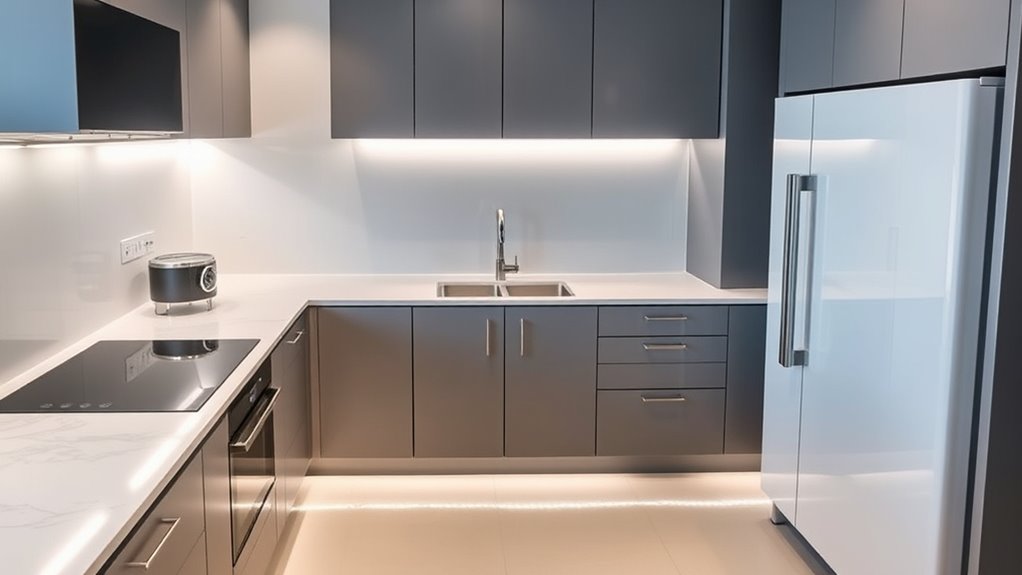

The kitchen work triangle connects your sink, stove, and refrigerator to boost efficiency and reduce unnecessary movement. Modern layouts often adapt this concept with open-concept designs, multipurpose islands, and flexible work zones to suit different spaces. These alternatives focus on maintaining ergonomic principles while offering more versatility and style. If you’re interested, you’ll discover how these innovative approaches can make your kitchen more functional and enjoyable.
Key Takeaways
- The traditional kitchen work triangle connects the sink, stove, and refrigerator to optimize efficiency.
- Modern layouts often incorporate open-concept designs and multipurpose islands to diversify work zones.
- Alternatives to the classic triangle include linear, L-shaped, U-shaped, and zone-based kitchen configurations.
- Ergonomic principles focus on easy reach, comfortable heights, and safety, adapting to various kitchen styles.
- Thoughtful placement of appliances improves workflow, reduces movement, and enhances both functionality and aesthetic appeal.
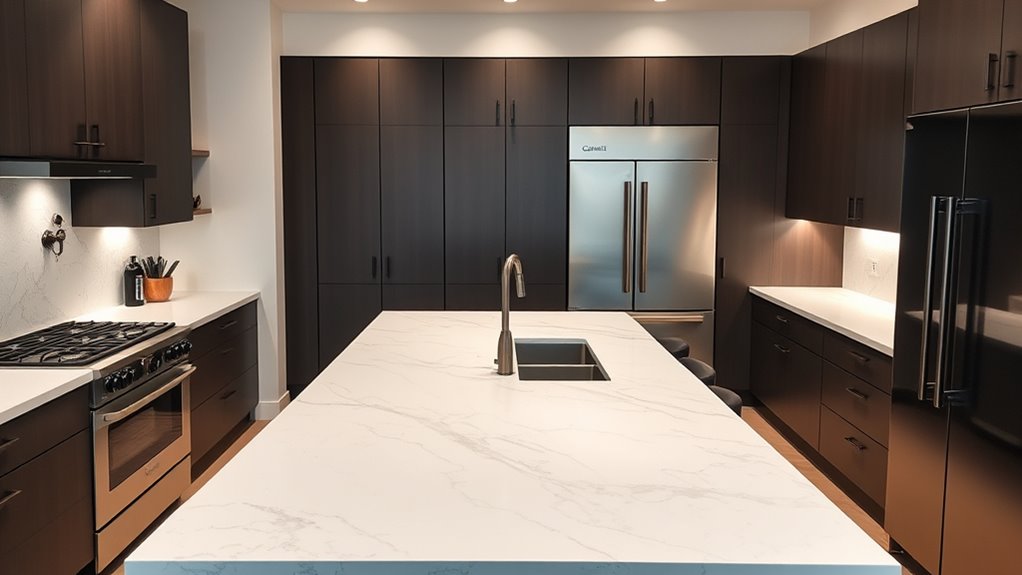
Have you ever wondered why some kitchens feel more efficient than others? A big part of that comes down to how well the space is organized, especially when it comes to the kitchen work triangle. This concept emphasizes the strategic placement of the three main work areas: the sink, the stove, and the refrigerator. When these appliances are positioned thoughtfully, it reduces unnecessary movement and streamlines your cooking process. You might notice that in well-designed kitchens, these key appliances aren’t just randomly placed; instead, they follow a logical pattern that maximizes efficiency.
Good appliance placement plays a vital role here. Instead of spreading out your appliances across the kitchen, a more effective approach is to keep them within a comfortable distance from each other, typically forming a triangle that’s neither too tight nor too sprawling. This minimizes walking back and forth and saves time. For example, having the refrigerator close enough to the countertop workspace makes grabbing ingredients quick and effortless, while positioning the stove near prep areas helps you cook without cramming or reaching across the counter. When you get this right, your kitchen feels more intuitive—you move naturally from one task to the next without unnecessary steps.
Ergonomic design is another essential aspect that complements the work triangle. It’s about designing your space so that everything is within easy reach and at comfortable heights. Think about the height of your countertops, the placement of cabinets, and even the positioning of frequently used tools. When you adopt an ergonomic approach, you reduce strain and fatigue. For instance, having the dishwasher or trash close to the prep area means fewer steps and less bending or stretching. It’s about making your kitchen a space where effort is minimized, and comfort is maximized. This not only makes cooking more enjoyable but also safer, as it helps prevent accidents caused by awkward movements or reaching. Additionally, understanding kitchen workflow principles can further enhance the efficiency of your layout.
While the traditional work triangle remains relevant, modern kitchens often incorporate alternative layouts that suit different needs and spaces. Open-concept designs, for example, might spread the work zones out more or combine them with multipurpose islands. Still, the core principles—thoughtful appliance placement and ergonomic design—stay central to creating an efficient kitchen. Whether you’re remodeling or designing from scratch, focusing on these elements ensures that your kitchen isn’t just beautiful but highly functional. When everything is thoughtfully arranged, cooking becomes less of a chore and more of an enjoyable activity, making your kitchen a true hub of productivity and comfort.
kitchen work triangle appliance placement
As an affiliate, we earn on qualifying purchases.
As an affiliate, we earn on qualifying purchases.
Frequently Asked Questions
How Does the Work Triangle Impact Kitchen Safety?
The work triangle enhances kitchen safety by reducing fire hazards and preventing accidents. By designing your space so that your stove, sink, and fridge are efficiently arranged, you avoid unnecessary movement and clutter, which can cause spills or trips. This setup keeps everything within easy reach, helping you focus on cooking safely. It minimizes risks like burns or falls, making your kitchen a safer environment for everyone.
Are There Specific Guidelines for Small Kitchen Spaces?
In small kitchens, about 60% of homeowners struggle with space, so specific guidelines help you maximize efficiency. Focus on compact layouts and strategic appliance placement to avoid clutter and guarantee safety. Keep key zones within easy reach, leave enough room for movement, and avoid blocking pathways. Prioritize versatile storage solutions and maintain clear counters. By following these tips, you’ll create a functional, safe cooking area even in limited space.
Can the Work Triangle Be Adapted for Open-Concept Layouts?
Yes, you can adapt the work triangle for open-concept kitchens by creating flexible layouts that balance functionality and flow. In open spaces, position your sink, stove, and fridge to maintain efficient movement without strict adherence to traditional triangle rules. Use zoning and strategic placement to make certain your kitchen remains practical and inviting, seamlessly integrating with your living area while supporting your cooking needs.
What Are the Benefits of Modern Alternatives Over Traditional Triangles?
Modern alternatives improve your kitchen by offering better ergonomic efficiency and space optimization. They allow you to customize your layout, reducing unnecessary distance and making movement smoother. Unlike traditional triangles, these options adapt to your unique space, making cooking more comfortable and efficient. You’ll find it easier to access essentials without clutter, creating a more functional and enjoyable environment. This flexibility helps you maximize every inch of your kitchen.
How Do Ergonomic Considerations Influence Kitchen Triangle Design?
Ergonomic considerations greatly influence kitchen triangle design by prioritizing your comfort and efficiency. You’ll find that ergonomic design guarantees key work areas are within easy reach, reducing strain and movement. This focus on user comfort means your kitchen feels more intuitive and less tiring to use. Properly designed, the triangle minimizes awkward stretches and awkward postures, making your cooking experience safer, more comfortable, and more enjoyable.
Conclusion
Think of your kitchen as a well-orchestrated dance, where the work triangle keeps everything flowing smoothly. When I redesigned my kitchen, shifting away from the classic triangle to a more open layout, cooking became effortless—like a perfectly choreographed performance. Remember, whether you stick to tradition or embrace modern designs, the goal is harmony and ease. After all, a well-planned kitchen is like a trusted partner, making every meal a joyful experience.