
Sustainability certifications like FSC, GOTS, and Fair Trade help you identify products that are environmentally responsible and socially fair. FSC certifies responsibly managed forests, GOTS ensures textiles meet organic and eco-friendly standards, and Fair Trade emphasizes fair wages and safe working conditions. Recognizing these labels can guide you toward more ethical choices and support sustainable practices. If you keep exploring, you’ll discover how these certifications guarantee transparency and authenticity in your eco-conscious purchases.
Key Takeaways
- FSC certifies responsible forest management, ensuring environmental, social, and economic sustainability in forest products.
- GOTS verifies textiles meet organic standards throughout the entire supply chain, from raw materials to finished products.
- Fair Trade certification guarantees fair wages, safe working conditions, and social equity for producers and workers.
- Independent audits maintain the integrity and transparency of these certifications, confirming adherence to strict sustainability criteria.
- Recognizing trusted labels like FSC, GOTS, and Fair Trade helps consumers make environmentally and socially responsible purchasing decisions.
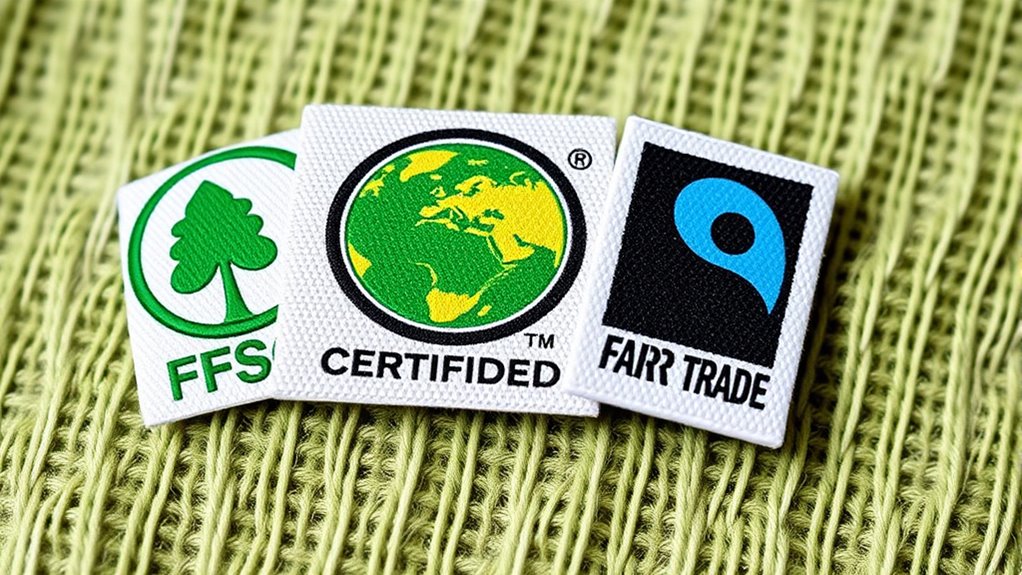
Have you ever wondered how to identify truly sustainable products and practices? It’s not always easy, especially with so many labels and claims floating around. That’s where the significance of eco labels comes into play. An eco label isn’t just a sticker; it’s a symbol of a product’s adherence to specific environmental and social standards. These labels help you easily recognize items that meet rigorous sustainability criteria, giving you confidence in your choices. But how do these labels get there? That’s where the certification process becomes essential. Certification involves a thorough review by an independent organization to ensure that a product or company meets established sustainability benchmarks. This process typically includes detailed assessments of sourcing, manufacturing, and labor practices, providing transparency and trustworthiness to the label.
Understanding the eco label significance means recognizing that these marks aren’t just marketing tools—they’re indicators of genuine environmental responsibility. For example, when you see a product bearing the FSC (Forest Stewardship Council) label, it signals that the wood or paper used comes from responsibly managed forests. The FSC certification process requires strict adherence to environmental, social, and economic standards, which are regularly audited. This assures you that the product supports forest conservation and fair labor practices. Similarly, the GOTS (Global Organic Textile Standard) label signifies that textiles meet organic farming and environmentally friendly processing standards. Achieving GOTS certification involves a rigorous process that verifies the entire supply chain, from raw material sourcing to manufacturing. It’s a thorough way to identify textiles that are not only organic but also produced with minimal environmental impact.
Eco labels like FSC and GOTS verify responsible sourcing and environmentally friendly practices through rigorous, independent audits.
Fair Trade certification is another essential label that emphasizes social responsibility. It confirms that producers and workers receive fair wages and work under safe conditions. The certification process for Fair Trade involves strict criteria about labor rights, community development, and environmental sustainability, all verified through regular audits. When you choose products with these labels, you’re supporting practices that prioritize ecological health and social equity. It’s a way to make informed decisions that align with your values. Additionally, understanding the importance of sleep and mental health can help you choose products and habits that support overall well-being, aligning with your eco-conscious lifestyle.
In essence, understanding the certification process behind these eco labels helps you see beyond the surface. It’s about trusting that the products you buy have been independently verified to meet high sustainability standards. These certifications are not just badges—they’re commitments to better environmental and social practices. So, next time you shop, pay attention to these labels and understand what they stand for. They’re your guide to making responsible choices that support a healthier planet and fairer world.

ECO PRODUCTS Renewable & Compostable 6.5" Wood Knives, Case of 500, FSC Certified Individually Wrapped Wooden Knife, Hot & Cold Food Friendly, Ridge Molded Into Handle For Better Grip and Strength
Case of 1000 6.5" wood knives (100 per pack, 5 packs per case)
As an affiliate, we earn on qualifying purchases.
As an affiliate, we earn on qualifying purchases.
Frequently Asked Questions
How Do Certifications Impact Product Pricing?
Certifications can increase product pricing because of certification costs, which businesses pass on to consumers. These certifications often enhance consumer perception, making products appear more ethical and sustainable. As a result, consumers may be willing to pay a premium for certified goods, recognizing their added value. Ultimately, certifications can boost your brand’s credibility and market appeal, but they also influence your pricing strategy due to the associated costs.
Can a Product Have Multiple Sustainability Certifications?
Yes, a product can have multiple sustainability certifications, which is known as certification overlap. This multi label validity bolsters the product’s eco-credibility, as it meets diverse standards like FSC, GOTS, and Fair Trade. When you see a product with several certifications, you can trust it aligns with various sustainability principles. Just verify that the certifications are legitimate, as overlapping labels can sometimes raise questions about their authenticity.
Are Certifications Universally Recognized Worldwide?
Certifications aren’t universally recognized worldwide, as acceptance varies based on regional standards and local awareness. You might find that some certifications, like FSC or Fair Trade, have strong global acceptance, but others may be less recognized outside specific regions. When choosing a product, consider where it’ll be used or sold, and look into the certification’s regional reputation to verify it aligns with your sustainability expectations and trust level.
How Long Does It Take to Obtain a Certification?
Think of the certification process like planting a seed; it can take anywhere from a few months to over a year. The certification timeline depends on your organization’s readiness, complexity, and the specific standards involved. For example, GOTS might take 6-12 months to complete, while FSC could take longer due to forest audits. You’ll need patience and thorough preparation to navigate each step successfully.
What Are the Common Challenges in Maintaining Certifications?
You face common challenges like costly compliance and ongoing audits when maintaining certifications. Staying consistent with sustainability standards requires continuous effort, updating processes, and investing in staff training. You must also prepare for regular inspections to ensure your practices align with certification criteria. These ongoing demands can strain resources, but staying committed helps you preserve your certification status and demonstrate your dedication to sustainable practices.

GREEN VOYAGE Women's GOTS Certified 100% Organic Cotton Heavyweight Relaxed Sweatpants, Melange Oatmeal, S
Sustainably made with 100% GOTS certified organic cotton (this product is labeled with a GOTS label)
As an affiliate, we earn on qualifying purchases.
As an affiliate, we earn on qualifying purchases.
Conclusion
By understanding certifications like FSC, GOTS, and Fair Trade, you guarantee your choices support eco-friendly practices and fair labor. Some might think these labels are just marketing, but they genuinely promote sustainability and ethical standards. When you choose certified products, you contribute to positive change, even if it feels small. Remember, collective small actions create a significant impact—so stay informed and support brands that prioritize the planet and people.

Amazon Fresh, Organic Fair Trade Peru Whole Bean Coffee, Medium Roast, 12 Oz
Fragrant medium roast Peruvian coffee with a smooth finish
As an affiliate, we earn on qualifying purchases.
As an affiliate, we earn on qualifying purchases.

Eco-Friendly Skincare, Natural Exfoliation, Cotton Bathroom Accessories, Sustainable soap Storage, Zero Waste Shower Products, Biodegradable soap Pouch
Crafted from natural cotton, our Soap Bags provide the ideal texture for cleansing and exfoliating skin, ensuring a…
As an affiliate, we earn on qualifying purchases.
As an affiliate, we earn on qualifying purchases.