

Online prices often fluctuate due to dynamic pricing strategies that adjust based on demand, browsing habits, and location, while in-store prices tend to be more stable with fixed rates and sales events. Online platforms make it easy to compare prices and find discounts, but they can also change suddenly, making costs unpredictable. Physical stores usually offer immediate access and price matching, providing a different shopping experience. If you want to understand how these differences can benefit you, there’s more to uncover.
Key Takeaways
- Online prices often fluctuate dynamically based on demand, browsing habits, and location, unlike more stable in-store prices.
- Retailers use real-time online pricing strategies to maximize profits, whereas physical stores rely on fixed prices and sales events.
- Online platforms enable quick price comparisons and transparency, while in-store prices are less variable and less transparent.
- In-store shopping offers immediate product access and potential for negotiation, while online shopping emphasizes convenience and online discounts.
- Price matching policies in physical stores help consumers stay competitive despite less frequent online price fluctuations.
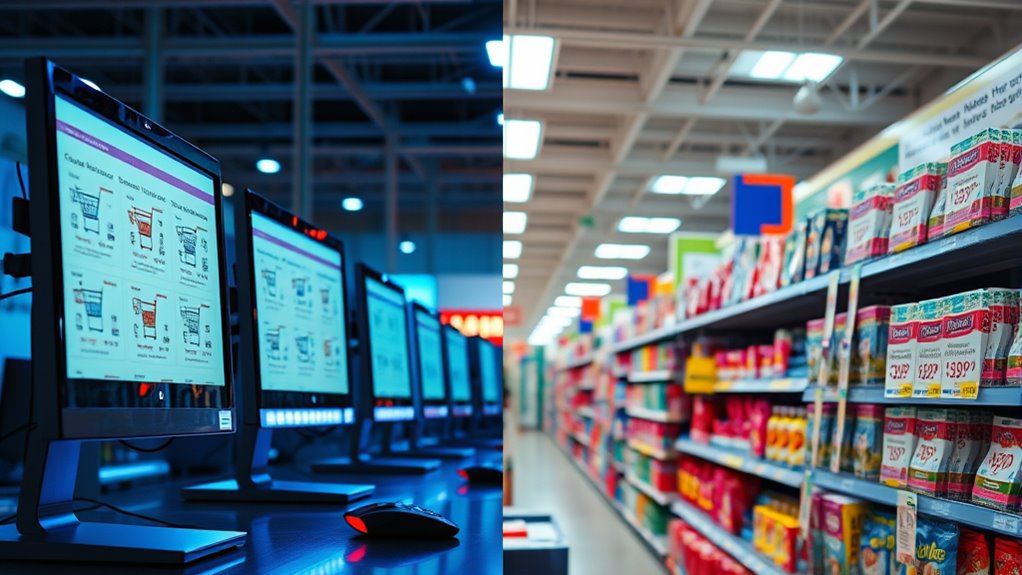
Deciding between online and in-store pricing can be challenging because each offers distinct advantages and drawbacks. When shopping online, you often encounter dynamic pricing, a strategy where prices fluctuate based on demand, browsing habits, time of day, and even your location. Retailers use this to maximize profits, adjusting prices in real-time to match market conditions. As a consumer, you might see prices change from one visit to another or even during a single browsing session. This can work in your favor if you catch a lower rate, but it also means prices can suddenly spike without warning. In contrast, in-store pricing tends to be more stable, although it’s not immune to discounts or promotions. Physical stores might set fixed prices for certain items, but they often use sales events or clearance discounts to attract buyers. Additionally, in-store pricing strategies can be influenced by regional competition and store-specific factors. Price matching is a common tactic that influences your decision. Many brick-and-mortar stores now offer price matching policies, promising to beat or match online prices if you find a lower rate elsewhere. This gives you confidence that you’re getting a fair deal, especially if you prefer shopping in person but want to benefit from online discounts. Conversely, online retailers frequently incorporate dynamic pricing into their business model, making it more difficult to predict the final cost. You can find tools and browser extensions that track price changes over time, helping you decide when to buy. While in-store price matching exists, it varies widely by retailer and often comes with strict conditions, such as requiring proof of the lower price and limited time frames. Another key difference lies in the transparency of pricing. Online, you can easily compare prices across multiple sites in seconds, giving you leverage to find the best deal. Physical stores might not display competitors’ prices, so you’re left relying on your memory or asking staff, which can be less convenient. However, shopping in-store allows you to see and feel products firsthand, which can influence your perception of value beyond just the price. Plus, in-store shopping offers immediate gratification—you get the product today, without waiting for shipping, and can often negotiate or take advantage of in-store discounts. Understanding the pricing strategies employed by both channels helps consumers make smarter decisions and avoid unexpected costs. Ultimately, your choice depends on what matters most: the certainty and immediacy of in-store shopping or the dynamic, price-sensitive environment of online shopping. Both methods have their unique pricing strategies—dynamic pricing online can lead to better deals if you’re vigilant, while in-store price matching offers a safety net for physical shoppers. Being aware of these differences allows you to make smarter, more informed purchasing decisions tailored to your preferences.
price comparison browser extension
As an affiliate, we earn on qualifying purchases.
As an affiliate, we earn on qualifying purchases.
Frequently Asked Questions
How Do Seasonal Sales Affect Online and In-Store Pricing Differences?
Seasonal sales cause pricing fluctuations that impact both online and in-store prices. You’ll notice seasonal discounts often lead to lower prices, but online stores tend to adjust prices faster to compete and clear inventory. In-store prices might remain higher or change less quickly. As a shopper, you can take advantage of these seasonal discounts by comparing prices across both channels, ensuring you get the best deal during these periods of fluctuation.
Are There Specific Product Categories More Prone to Price Discrepancies?
You’ll notice that luxury brands and electronic gadgets often have bigger price discrepancies online versus in-store. Luxury brands tend to offer online discounts to attract shoppers, while in-store prices may stay higher due to exclusivity. Electronic gadgets also show significant differences, with online stores frequently providing lower prices through sales or promotions. So, if you’re hunting for deals, these categories are more prone to price discrepancies, making comparison shopping worth your time.
How Do Return Policies Differ Between Online and Physical Stores?
You find that return policies often differ between online and physical stores, with online stores typically offering longer return windows and easier processes. In-store, you might face stricter time limits or restocking fees. If price matching is available, you can sometimes use it to get the best deal. Always check the store’s return policies beforehand to avoid surprises, and see if they honor price matching to save money.
What Role Do Shipping Costs Play in Online Pricing?
Shipping fees and delivery charges play a vital role in online pricing, much like the hidden costs lurking behind a seemingly perfect deal. You often see these added costs at checkout, impacting the final price. Retailers incorporate shipping fees to cover logistics, which can make online purchases more expensive than in-store ones. So, when shopping online, always factor in delivery charges to gauge the true cost of your items.
How Do Loyalty Programs Influence Pricing Strategies Online Versus In-Store?
Loyalty programs influence pricing strategies by offering loyalty discounts and membership perks that encourage repeat purchases both online and in-store. Online, you might see personalized discounts or early access to sales, while in-store, loyalty cards could give you exclusive discounts or free gifts. These strategies help retailers boost customer retention and make their pricing more appealing, ensuring you get added value whether shopping online or in person.
Conclusion
Now that you see the differences, you understand the reasons, and you recognize the impact, remember this: whether you shop online or in-store, stay informed, compare prices, and make smart choices. Know what to look for, understand the factors at play, and always keep your priorities in mind. Because when you’re aware, you’re empowered, when you’re empowered, you make better decisions, and when you make better decisions, you get the best value. Shop smart, shop confident.