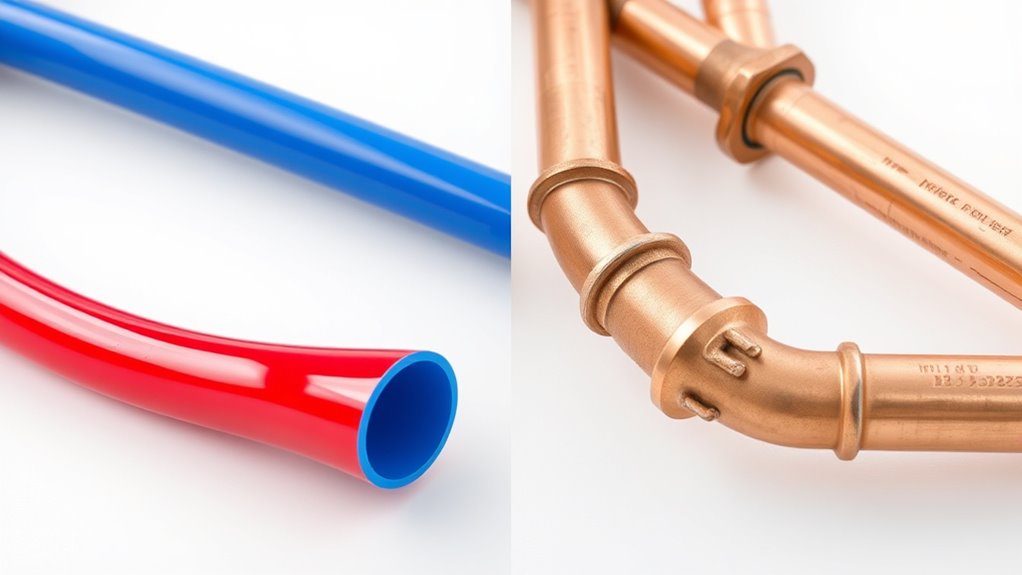

When choosing between PEX and copper plumbing, consider your priorities. Copper is known for its durability, resistance to high temperatures, and long-lasting performance, but it’s more labor-intensive and costly to install. PEX is flexible, easier, and faster to install, plus it resists corrosion and scale buildup. However, some local codes restrict its use. To find out which option best fits your project needs and long-term goals, explore the details further.
Key Takeaways
- Copper is highly durable and corrosion-resistant, lasting over 50 years with proper installation.
- PEX offers greater flexibility, easier installation, and reduces labor costs compared to copper.
- Copper requires specialized tools and skilled labor, making installation more complex and time-consuming.
- PEX is resistant to scale and chlorine buildup, extending system lifespan and simplifying maintenance.
- Material choice depends on project needs, local codes, and long-term durability considerations.
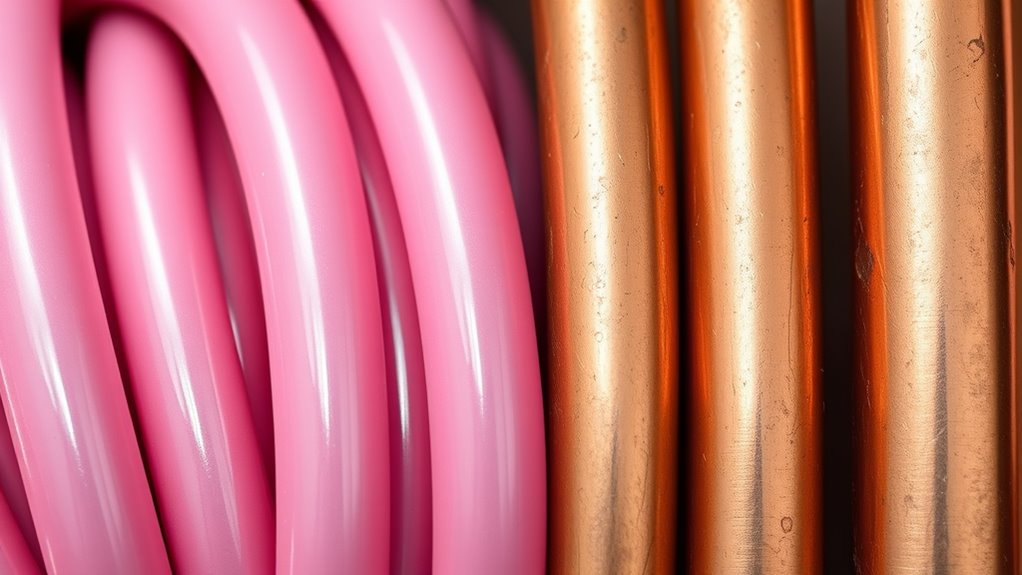
When choosing between PEX and copper plumbing, understanding their differences can help you make an informed decision for your home or project. Both materials have unique advantages and challenges that can influence your choice depending on your specific needs. One of the key factors to contemplate is the advantages comparison. Copper has been a trusted plumbing material for decades, known for its durability, high-temperature resistance, and natural antimicrobial properties. It’s resistant to corrosion and can last over 50 years when properly installed. Copper pipes are also less likely to develop leaks over time, making them a reliable choice for long-term plumbing systems.
On the other hand, PEX (cross-linked polyethylene) offers notable advantages that appeal to many homeowners and contractors. It’s incredibly flexible, which simplifies installation, especially in tight spaces or complex layouts. PEX pipes are lightweight and come in continuous rolls, reducing the number of fittings needed, which cuts down on potential leak points. Additionally, PEX is resistant to scale and chlorine, and it handles temperature fluctuations well. Its affordability and ease of installation make it a popular choice in modern plumbing projects. Moreover, PEX’s resistance to corrosion and mineral buildup can extend the lifespan of your plumbing system.
PEX’s flexibility, lightweight design, and resistance to scale and chlorine make it a popular, easy-to-install choice for modern plumbing.
However, the advantages comparison isn’t the only factor to weigh. Installation challenges can considerably impact your project’s timeline and overall success. Copper installation can be more labor-intensive, requiring precise cutting, fitting, soldering, and sometimes more complex tools. It’s essential to have experience or hire a professional to ensure proper connections and prevent leaks. Copper pipes are also more susceptible to damage during installation, especially if mishandled, which can lead to costly repairs or delays.
In contrast, PEX installation tends to be faster and more straightforward. Its flexibility allows you to bend pipes around obstacles without additional fittings, and you can often install it without specialized tools. You simply cut the pipe to length, attach fittings with crimp or clamp rings, and secure it in place. This simplicity can reduce labor costs and installation time. Nevertheless, PEX does require proper fittings and connections to prevent leaks, and some local codes may restrict its use in certain applications or regions.

EFIELD 1/2-inch PEX Pipe Plumbing Installation Kit: 1/2-Inch X 200 ft Pex-b Tubing (100 ft Red + 100ft Blue), 12 Pcs Pex Brass Fittings, Cinch Clamp Fastening Tool and 20 Pcs 1/2" Clamps,(AB21530I)
Ideal DIY Installtion Kit-Pex Plumbing Pipe and Fititng, Tool Bundle
As an affiliate, we earn on qualifying purchases.
As an affiliate, we earn on qualifying purchases.
Frequently Asked Questions
Which Plumbing Material Is More Environmentally Friendly?
You’ll find PEX more eco-friendly overall because it has a better Eco-friendliness comparison, thanks to its lower energy use during manufacturing. Plus, PEX has higher Recycling potential since it can often be recycled more easily than copper. Copper, however, is naturally recyclable and durable. But, considering the environmental impact from production to disposal, PEX generally offers a greener choice for your plumbing needs.
Can PEX and Copper Be Used Together in the Same System?
Yes, you can use PEX and copper together in the same system. Just make certain the joint compatibility is appropriate, as different fittings are needed for each material. Proper system integration is key to preventing leaks and corrosion. Use transition fittings designed for connecting PEX to copper, and follow manufacturer guidelines. This approach allows you to combine both materials effectively, leveraging their individual benefits in your plumbing setup.
How Do PEX and Copper Perform in Cold Climates?
In cold climates, think of PEX as a flexible shield, resilient against freezing, thanks to its high tolerance and ability to expand. Copper, like a sturdy but rigid guardian, offers less freezing tolerance and needs proper insulation to prevent bursts. You should insulate both properly; PEX’s natural resilience reduces worry, while copper’s performance depends heavily on insulation to guard against the cold’s grip.
Are There Health Risks Associated With PEX or Copper?
You might wonder about health concerns with PEX and copper pipes. Generally, copper is safe, but it can leach small amounts of metals into your water, especially if the water is highly acidic. PEX pipes are made from plastic, and while they’re considered safe, some chemical leaching could occur if the material breaks down over time. Overall, both are safe when properly installed and maintained, but it’s good to monitor water quality regularly.
What Is the Typical Lifespan of PEX Versus Copper Pipes?
You might think copper pipes last forever, but they typically endure 50-70 years despite pipe corrosion risks. PEX, on the other hand, boasts a shorter lifespan of around 40-50 years, yet it’s easier to install and saves on installation costs. Irony strikes—copper’s durability comes with higher costs and potential corrosion, while PEX’s shorter life is offset by affordability and flexibility, making it a practical choice for many homeowners.

Eoiips Copper Round Tube 1/2”OD x 12/25”ID (12-13mm) Straight Copper Round Metal Pipe Tubing, 10" Length, 3pcs
【Specification】Size: 12/25”ID x 1/2”OD (12-13mm); Length: 10”(250mm); 3PCS
As an affiliate, we earn on qualifying purchases.
As an affiliate, we earn on qualifying purchases.
Conclusion
Choosing between PEX and copper plumbing is like selecting the right thread to weave your home’s story. Copper symbolizes timeless strength and tradition, while PEX represents flexibility and modern innovation. Your decision shapes the fabric of your daily life, ensuring comfort and reliability. Trust your instincts, and remember, the right material isn’t just about pipes—it’s about forging a future that flows seamlessly, sturdy as copper’s legacy or adaptable as PEX’s promise.

Pex Fittings 1/2 Inch, 36 PCS SUNGATOR 1/2 Inch Pex Fittings Set, 12 Each PEX Elbow Tee Coupling, 1/2" Pex Fittings For Pex Pipe, No Lead Brass, ASTM F1807
【Package Includes】: Pex B Fittings Combo includes 12pcs 1/2" PEX Elbows, 12pcs 1/2" PEX Tees, 12pcs 1/2" PEX…
As an affiliate, we earn on qualifying purchases.
As an affiliate, we earn on qualifying purchases.

AIM Plumbing Solder Kit with solder wire, flux and brush, Solder for Plumbing Repairs (113g / 4oz)
AIM Plumbing Kit includes all the solder and solder paste flux you need.
As an affiliate, we earn on qualifying purchases.
As an affiliate, we earn on qualifying purchases.