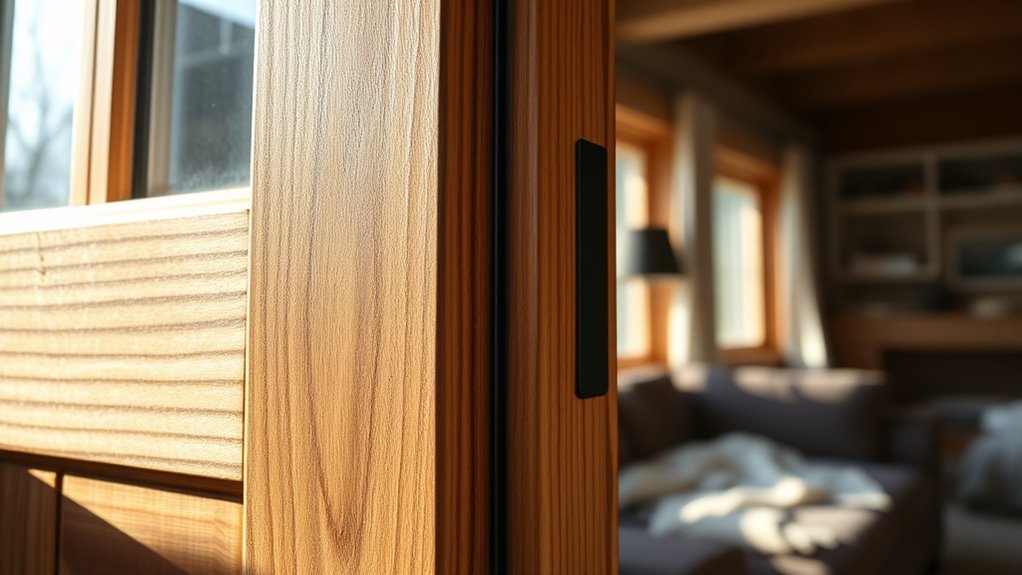

Weatherstripping doors offers various options like foam tape, V-strip, and door sweeps to suit different needs. Use foam tape for interior or less-used exterior doors, and V-strip or tension seals for high-traffic exterior doors to create a tight seal. Install door sweeps at the bottom to block drafts and pests. Proper placement along door frames guarantees maximum efficiency. Keep exploring to discover how to choose, install, and maintain the best weatherstripping for your doors.
Key Takeaways
- Various weatherstripping options include foam tape, V-strip, and door sweeps, suitable for different door types and usage levels.
- Foam tape is ideal for interior doors and less-used exterior doors due to its affordability and ease of installation.
- V-strip or tension seal provides a durable, tight seal for exterior doors with frequent use.
- Door sweeps are attached at the bottom of exterior doors to block drafts, pests, and debris effectively.
- Proper placement involves sealing the entire door frame, especially areas with significant gaps, for optimal energy efficiency.
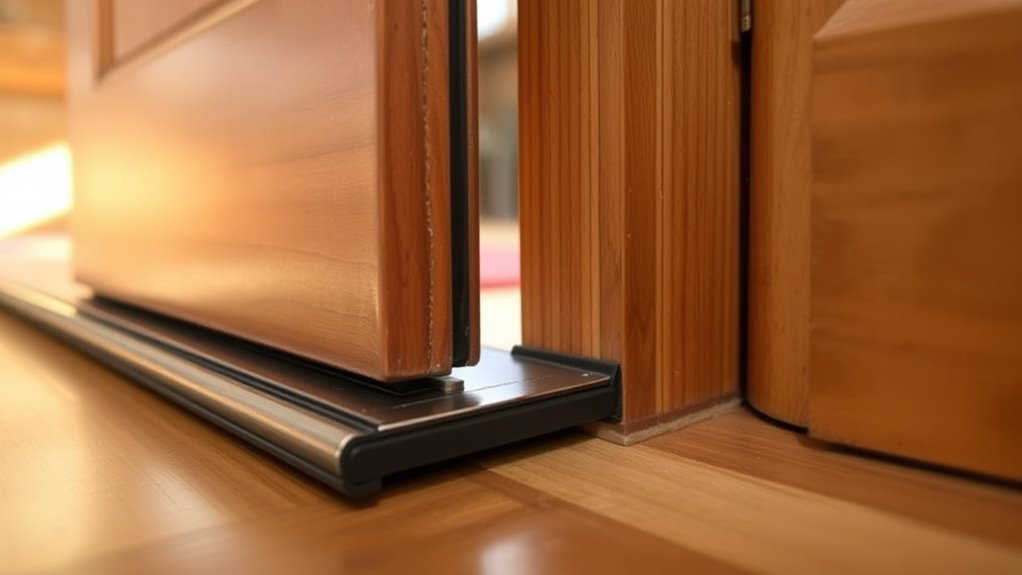
Weatherstripping doors is an effective way to improve your home’s energy efficiency by sealing gaps that let in drafts, dust, and pests. When you properly weatherstrip, you prevent warm air from escaping during winter and cool air during summer, reducing your HVAC’s workload. This not only cuts down on energy bills but also makes your home more comfortable year-round. To maximize these benefits, focus on the right type of weatherstripping for each door and ensure correct installation.
Weatherstripping doors boosts energy efficiency and comfort by sealing drafts and pests.
First, consider the various options available. Foam tape is affordable and easy to install, making it suitable for many interior doors and less-used exterior doors. You peel off the backing and press it into place along the door frame, sealing small gaps effectively. For more permanent solutions, V-strip or tension seal weatherstripping works well, especially for exterior doors that experience frequent use. These options are durable and provide a tighter seal, but they require precise measurement and installation. Another choice is door sweeps, which attach to the bottom of exterior doors to block drafts and pests from sneaking underneath.
When it comes to installation tips, preparation is key. Start by cleaning the door frame thoroughly to remove dust, dirt, and old weatherstripping residues. Measure the gaps carefully, so you select the correct thickness and length of weatherstripping material. For foam tape, cut it to size before peeling and sticking it in place. For V-strip or tension seals, make sure the seal fits snugly in the door’s jamb and trim excess if needed. Always check that the weatherstripping compresses slightly when the door is closed, creating a tight seal without impeding the door’s operation.
Pay attention to the placement of the weatherstripping—apply it along the entire length of the door frame where gaps are most noticeable. If your door has a threshold or sill, consider installing a door sweep or replacing the existing one with a more effective model. Proper installation not only improves energy efficiency but also prolongs the lifespan of your weatherstripping by preventing damage caused by gaps or misalignment. Additionally, choosing HEPA filtration or other high-quality weatherstripping options can enhance your home’s overall insulation and air quality.
Keep in mind that weatherstripping is a cost-effective way to enhance your home’s insulation. It’s a straightforward DIY project, but taking the time to measure accurately and follow installation tips ensures the best results. When done correctly, you’ll notice a difference in your comfort levels and energy bills, making your home more efficient and less prone to drafts and pests.
weatherstripping foam tape for doors
As an affiliate, we earn on qualifying purchases.
As an affiliate, we earn on qualifying purchases.
Frequently Asked Questions
How Long Does Weatherstripping Typically Last Before Replacement?
Weatherstripping typically lasts about 3 to 5 years before you should consider replacing it, depending on the door insulation quality and sealing techniques used. Over time, exposure to weather and frequent use can wear down the material, reducing its effectiveness. Regularly inspect your weatherstripping for gaps or damage, and replace it promptly to maintain energy efficiency and keep drafts out. Proper sealing techniques help extend its lifespan.
Can Weatherstripping Be Installed on Uneven or Warped Doors?
Think of weatherstripping as a flexible handshake; it can adapt to some uneven or warped doors. You can install it on doors with minor misalignment, especially if you choose materials with good flexibility, like foam or foam tape. However, if the door is severely warped or misaligned, the weatherstripping may not seal properly, and realigning the door or choosing more adaptable materials will give you better results.
What Are the Best Types of Weatherstripping for Exterior Doors?
The best types of weatherstripping for exterior doors include door sweeps and V-strip (Teflon) for effective door insulation and energy efficiency. You should select durable materials like vinyl or rubber that resist weather conditions. These options create a tight seal, preventing drafts and heat loss, which helps to lower energy bills. Proper installation guarantees your door remains well-insulated, making your home more comfortable and energy-efficient year-round.
Is Weatherstripping Effective Against All Types of Weather Conditions?
You might worry if weatherstripping can handle all weather conditions. For example, during a harsh winter, well-installed foam weatherstripping improved insulation effectiveness, keeping your home warmer. While weatherstripping is generally effective, it can face installation challenges in extreme weather, which might reduce its performance. Overall, proper selection and installation help weatherstripping work well against various weather, but it’s essential to choose the right type for your climate.
How Do I Choose the Right Weatherstripping for Soundproofing?
To select the appropriate weatherstripping for soundproofing, focus on soundproofing materials that minimize noise transfer. Look for options like rubber or foam seals, which provide better sound absorption and sealing. Use these noise reduction techniques around door frames to block sound leaks. Make certain the weatherstripping fits snugly to enhance effectiveness, and consider multi-layered solutions for maximum soundproofing in noisy environments.
Conclusion
Weatherstripping your doors not only keeps out drafts but also saves you money on energy costs. By choosing the right type for each area, you guarantee a snug, efficient seal that lasts. It’s a simple fix that makes a big difference—so don’t wait. If you think weatherstripping won’t work, remember, small changes often lead to the biggest improvements. Seal your doors today and enjoy a warmer, more comfortable home tomorrow.