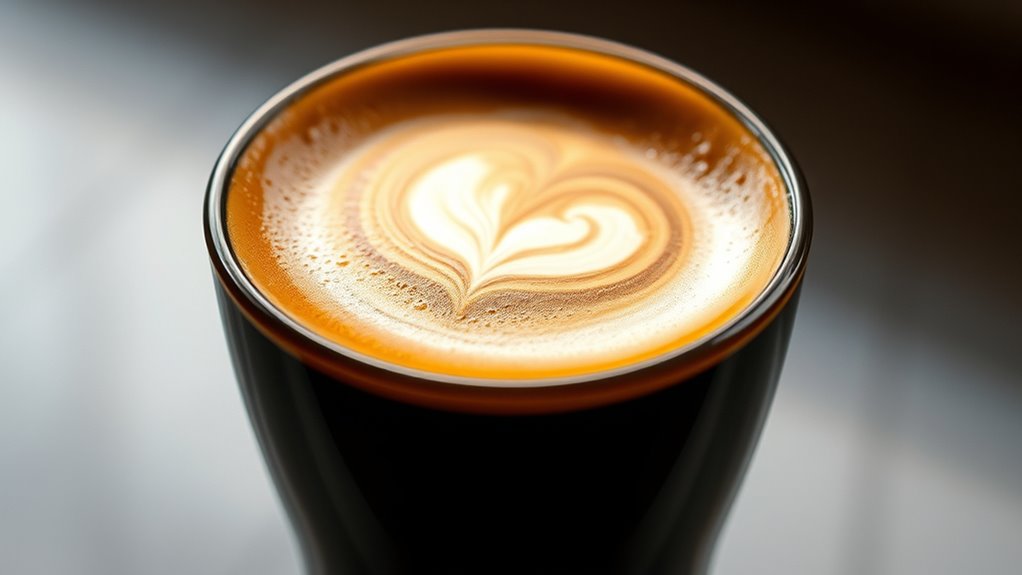

To improve crema, choose high-quality, freshly roasted beans like Arabica or a blend, and grind them fine with a consistent burr grinder. Use ideal water temp (195-205°F) and pressure around 9 bars, tamp evenly with about 30 pounds of force, and pull shots for 25-30 seconds. Keep your equipment clean and maintain proper storage to preserve freshness. Mastering these variables helps develop that rich, golden crema—if you stay curious, you’ll uncover even more tips.
Open a free Amazon Business account
Business pricing, bulk buying and tax-exempt orders.
As an affiliate, we earn on qualifying purchases.
Key Takeaways
- Use a consistent, fine grind and even tamping to ensure optimal water flow and crema development.
- Maintain precise water temperature (195-205°F) and pressure (around 9 bars) for ideal extraction.
- Choose fresh, sustainably sourced beans with the right roast level to enhance crema richness and stability.
- Regularly clean and calibrate your espresso machine to prevent mineral buildup and ensure consistent pressure.
- Adjust shot timing and grind size based on extraction quality, aiming for a 25-30 second pull for optimal crema.
Understanding the Composition of Crema
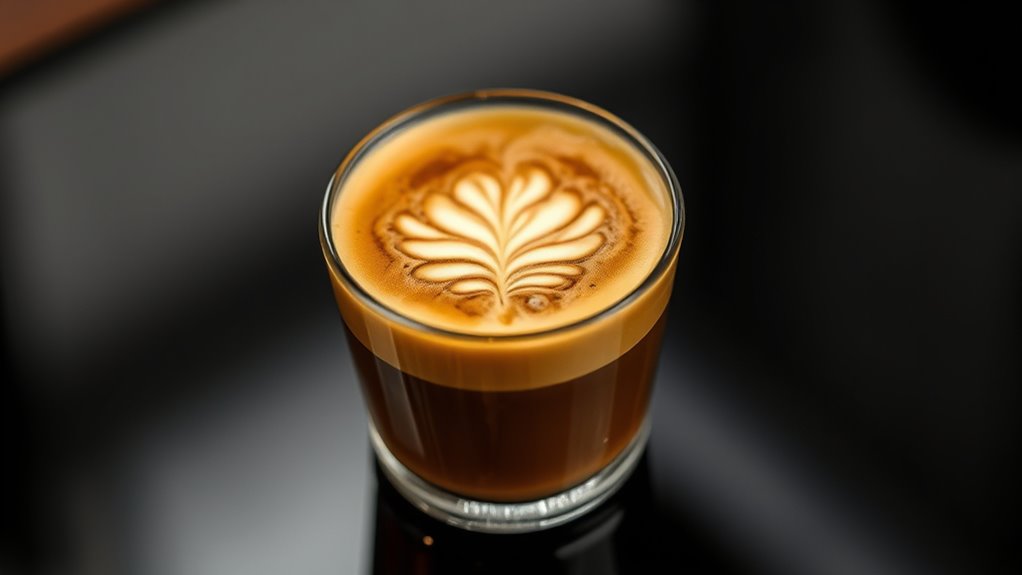
Understanding the composition of crema is essential for mastering coffee quality. Crema forms when hot water passes through finely ground coffee, extracting oils, proteins, and sugars. These compounds create a rich, golden layer that signals a well-extracted espresso. To achieve ideal crema, you need to pay attention to milk frothing techniques if you’re adding milk, as over-foamed milk can disturb the crema’s stability. Additionally, regular espresso machine maintenance is vital; a clean machine ensures consistent pressure and temperature, which directly impacts crema formation. Proper calibration and cleaning prevent blockages and buildup that can diminish crema quality. Moreover, understanding advanced processing power and how it can optimize extraction and brewing consistency allows baristas to better control variables that influence crema. By understanding these factors, you’ll better control the variables that influence crema, leading to a more satisfying and professional coffee experience.
The Role of Coffee Bean Selection and Roast Level
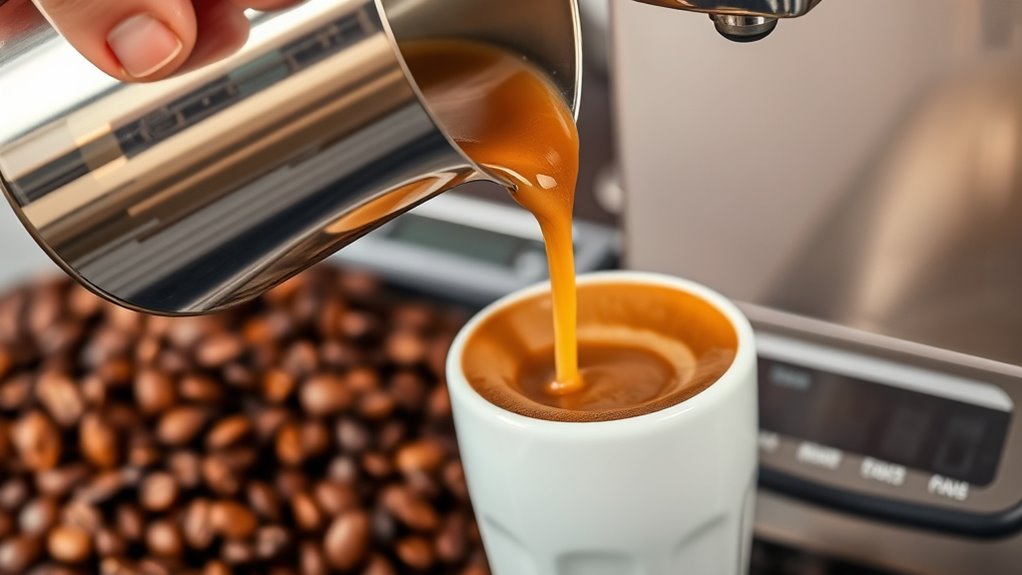
Choosing the right coffee beans and roast level is essential because they directly influence the flavor, aroma, and crema of your espresso. Opting for sustainably sourced beans guarantees you support environmentally responsible practices, often resulting in fresher, more vibrant flavors. Different bean varietals bring unique characteristics; for example, Arabica beans tend to produce a sweeter, more nuanced crema, while Robusta adds body and a richer crema layer. The roast level also matters: medium roasts preserve the bean’s original flavor complexities, enhancing crema formation, whereas dark roasts develop bold, smoky notes that can intensify crema stability. Selecting a combination that aligns with your taste preferences and quality standards will elevate your espresso experience. Remember, the right beans and roast level set the foundation for a perfect crema every time. Understanding the importance of bean selection can help you make more informed choices for your brewing process.
Optimal Grind Size and Consistency for Crema Formation

Achieving a rich, velvety crema depends heavily on your grind size and consistency. If your grind is too fine, water struggles to flow, causing over-extraction and dull crema. Too coarse, and the water flows too quickly, resulting in thin, lacking crema. Find the right grind size—typically a fine, powdery texture—to balance extraction. Consistency is equally crucial; uneven grounds lead to inconsistent extraction, producing patchy or weak crema. Use a burr grinder to guarantee uniform particle size, and measure your coffee precisely each time. Regularly check and adjust your grind size based on how your espresso pulls. Proper filtering and maintenance of your equipment also play a vital role in ensuring optimal crema quality. Remember, small tweaks can make a big difference in crema quality. Mastering grind size and consistency helps you open that perfect, luscious crema every shot.
The Impact of Water Temperature and Pressure
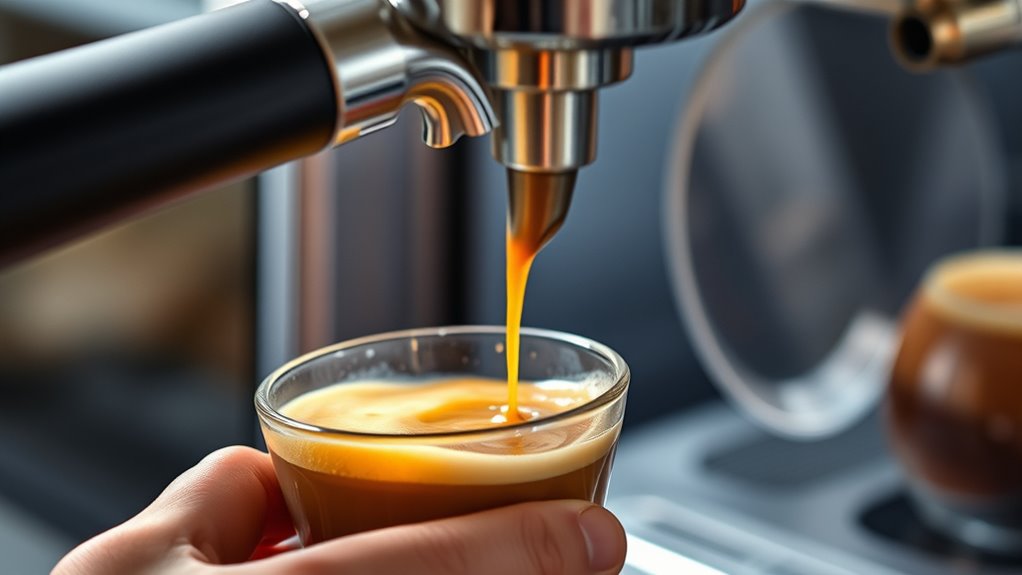
Once you’ve refined your grind size and consistency, controlling water temperature and pressure becomes the next key step in creating exceptional crema. Water temperature influences extraction speed and flavor, so aim for around 195-205°F for ideal results. Too hot, and you risk over-extraction; too cold, and the coffee may under-extract, reducing crema quality. Consistent pressure, typically around 9 bars, ensures proper extraction and a rich crema layer. Regular machine calibration is essential to maintain accurate pressure and temperature levels. Additionally, water quality impacts crema—use clean, filtered water to prevent mineral buildup and guarantee pure extraction. By fine-tuning these variables, you’ll enhance crema formation, delivering a balanced, velvety crema that elevates your espresso experience.
Techniques for Proper Tamping and Extraction
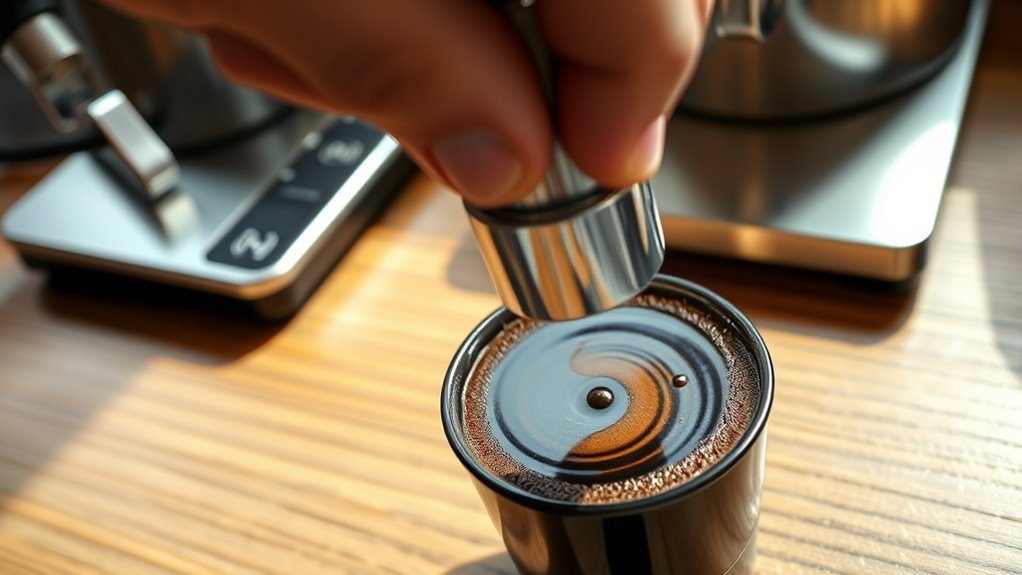
To guarantee ideal extraction and a consistent, rich crema, you need to master proper tamping technique. Applying the right tamping pressure ensures the coffee bed is evenly compacted, which promotes uniform extraction. Too much pressure can cause over-compaction, leading to slow flow and under-extraction, while too little results in uneven water flow and weak crema. Focus on applying steady, consistent tamping pressure—about 30 pounds is perfect. Additionally, timing your extraction correctly is vital. Aim for a shot time of around 25 to 30 seconds, adjusting grind size if needed. Proper tamping and precise extraction timing work together to produce excellent crema, ensuring your espresso is flavorful, balanced, and visually appealing. Understanding the importance of proper grind size can further improve your results.
The Importance of Freshness and Coffee Storage
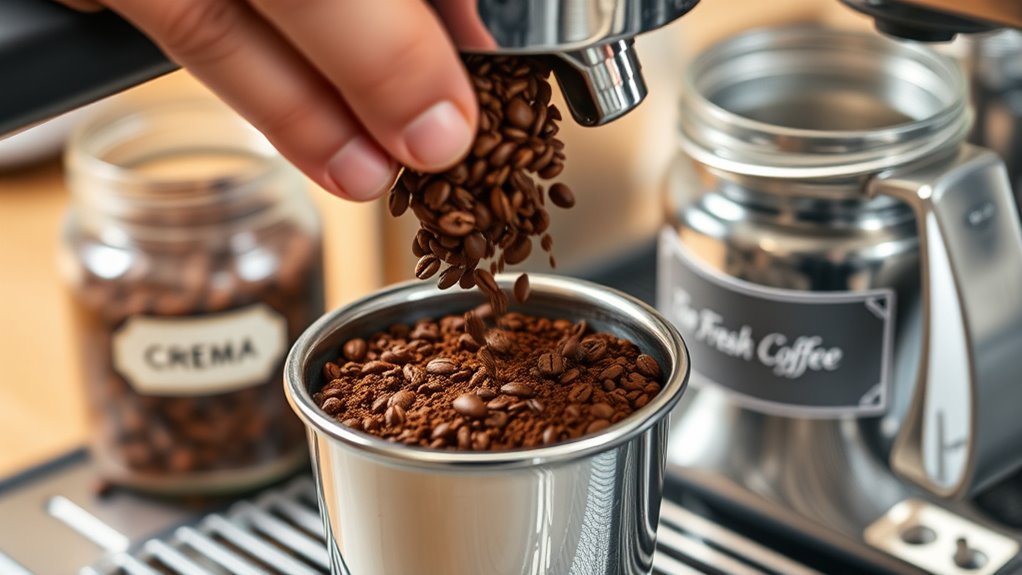
Proper tamping and extraction techniques set the foundation for a great espresso shot, but even the best process can’t overcome stale coffee. Coffee freshness directly impacts flavor and crema quality, making proper storage techniques essential. To preserve freshness, consider these storage tips:
- Use airtight containers to limit exposure to oxygen.
- Store coffee in a cool, dark place away from heat and light.
- Avoid refrigerating or freezing coffee, which can introduce moisture and odors.
- Grind beans just before brewing to maximize flavor and crema development.
- Maintaining optimal coffee storage conditions is crucial for preserving aroma and flavor over time.
Troubleshooting Common Crema Issues
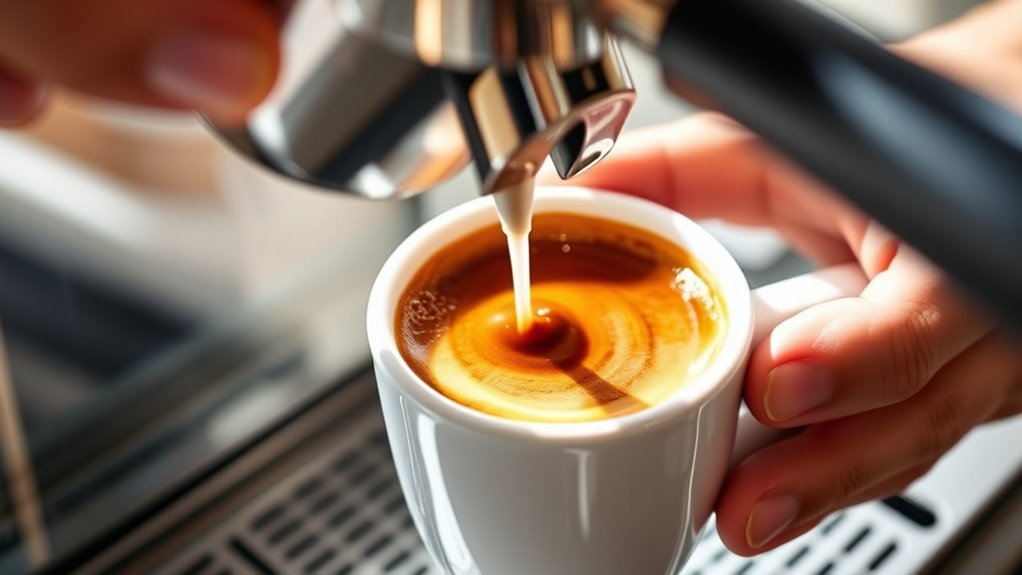
If your espresso shot lacks a rich, thick crema, identifying the root cause is essential to improving your brew. Poor crema can stem from issues like inconsistent grind size, low-quality beans, or improper espresso machine maintenance. Additionally, over-foaming milk during milk frothing can disturb the shot’s crema. Use this table to troubleshoot common problems:
| Issue | Solution |
|---|---|
| Thin, pale crema | Adjust grind finer; check freshness |
| Poor crema after steaming | Clean steam wand; ensure proper milk frothing technique |
| Inconsistent crema | Maintain espresso machine regularly; use fresh beans |
Frequently Asked Questions
How Does Altitude Affect Crema Quality?
Altitude effects can influence your crema quality because higher elevations often mean beans have different density levels. As you brew, the lower air pressure at altitude can cause the water to extract flavors differently, affecting crema formation. Dense beans may require adjustments in grind size or pressure to achieve ideal crema. So, pay attention to altitude effects and bean density to fine-tune your espresso for that perfect, velvety crema.
Can Adding Milk Alter Crema Stability?
Adding milk can indeed alter crema stability, but the effect depends on how the milk interacts with the espresso’s oils and proteins. Some believe milk interaction weakens crema by disrupting the foam structure, while others find it can help preserve crema longer by adding fats that stabilize the bubbles. To maintain crema preservation, consider how your milk’s temperature and freshness influence its interaction with the espresso, ultimately affecting crema’s longevity.
What Role Does Humidity Play in Crema Formation?
Humidity levels markedly influence crema formation by affecting moisture retention during brewing. When humidity is high, the beans absorb more moisture, which can hinder proper crema development, making it thinner or less stable. Conversely, lower humidity helps maintain ideal moisture levels, allowing the crema to form a rich, velvety layer. Adjusting your environment or storage conditions can improve crema stability, ensuring a better espresso experience.
Does Brewing Time Influence Crema Density?
Think of brewing time as a gardener tending a delicate plant; too short, and the flower isn’t fully blossomed, too long, and it wilts. Longer brew duration allows for better extraction time, which can increase crema density, making it richer and more stable. But, if you overdo it, you risk extracting bitter compounds. So, finding the right balance in brew duration is key to achieving ideal crema density.
How Do Different Espresso Machine Brands Impact Crema Consistency?
Different espresso machine brands impact crema consistency through their build quality, pressure stability, and temperature control. You should pay attention to grinder calibration and water temperature, as these factors influence crema quality regardless of the brand. A well-calibrated grinder ensures proper extraction, while consistent water temperature helps produce stable, rich crema. Choosing a reputable brand with precise temperature and pressure controls makes it easier to attain a uniform, desirable crema every time.
Conclusion
Mastering crema isn’t just about fancy equipment; it’s about understanding the science behind each shot. While fresh beans and precise technique set the foundation, the artistry lies in how you tweak variables like temperature and tamping. Think of crema as both a sign of quality and a canvas for your skill. Embrace the challenge, and you’ll find that the perfect crema is as rewarding as the first sip—an impressive blend of science and passion.
NFL season / tailgating Picks
team gear
As an affiliate, we earn on qualifying purchases.