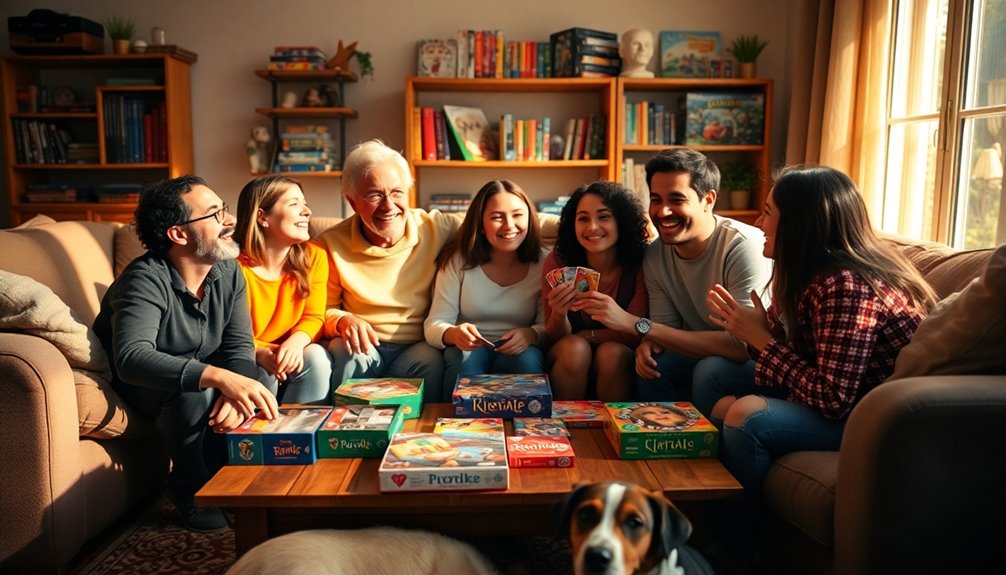

For most households, SEQUENCE is my best overall pick because its mix of cards, pattern-building, and team play works across a wider age range than many family games. UNO is the best value for quick rounds and easy portability, while Candy Land is the strongest beginner choice for children who are not ready to read. The main tradeoff is between simple games that welcome everyone immediately and more strategic options that stay engaging after repeated play. Families must also choose between calm competition, direct player conflict, word-based challenges, and high-energy party play. Continue reading for my full comparison of all 15 games, including the drawbacks that may rule out an otherwise appealing pick.
Key Takeaways
- SEQUENCE earned the top position because it offers more cross-generational flexibility than Candy Land, Scrabble, or the louder party games.
- UNO provides the strongest value: its low rule burden, compact format, and flexible group appeal outweigh its limited strategic depth.
- Candy Land is the easiest starting point for pre-readers, but families should expect children to outgrow it sooner than Sorry! or Jenga.
- Rummikub and Scrabble reward repeat play more than luck-heavy classics, though their number and language demands can widen skill gaps.
- Grab The Mic, TAPPLE, and Taco Cat Goat Cheese Pizza suit energetic gatherings, while Yahtzee and SEQUENCE are better fits for calmer family tables.
| Do You Really Know Your Family? |  | Best for Family Bonding | Minimum Age: 8 years | Game Format: Card game | Core Activities: Questions and silly challenges | VIEW ON AMAZON | See Our Full Breakdown |
| Hasbro Gaming Scrabble Board Game |  | Best Classic Word Game | Number of Players: 2–4 | Minimum Age: 8 years | Game Type: Word-building board game | VIEW ON AMAZON | See Our Full Breakdown |
| Candy Land Kingdom of Sweet Adventures |  | Best for Preschoolers | Number of Players: 2 or more | Minimum Age: 3 years | Game Type: Color-matching race game | VIEW ON AMAZON | See Our Full Breakdown |
| Monopoly Family Board Game |  | Best for Long Family Game Nights | Number of Players: 2–6 | Minimum Age: 8 years | Game Type: Property-trading board game | VIEW ON AMAZON | See Our Full Breakdown |
| USAOPOLY Flip 7 Card Game |  | Best Overall | Number of Players: 3 or more | Minimum Age: 8 years | Play Time: 20 minutes | VIEW ON AMAZON | See Our Full Breakdown |
| Hasbro Gaming Yahtzee Game |  | Best for Small Families | Minimum Players: 2 | Maximum Players: No stated limit | Recommended Age: 8 years and up | VIEW ON AMAZON | See Our Full Breakdown |
| SEQUENCE Game with Folding Board, Cards, and Chips by Jax |  | Best for Large Groups | Player Count: 2-12 | Recommended Age: 7 years and up | Board Dimensions: 19.75 x 15.25 inches | VIEW ON AMAZON | See Our Full Breakdown |
| Mattel Games UNO Card Game for Kids, Adults & Families |  | Best for Accessible Play | Player Count: 2-10 | Recommended Age: 7 years and up | Game Format: Card game | VIEW ON AMAZON | See Our Full Breakdown |
| Pressman Rummikub – The Original Rummy Tile Game |  | Best for Strategic Families | Player Count: 2-4 | Recommended Age: 8 years and up | Game Format: Tile game | VIEW ON AMAZON | See Our Full Breakdown |
| Sorry! Board Game for Kids Ages 6 and Up |  | Best for Younger Children | Player Count: 2-4 | Recommended Age: 6 years and up | Game Format: Board game | VIEW ON AMAZON | See Our Full Breakdown |
| Grab The Mic |  | Best for Karaoke Parties | Game Type: Karaoke party game | Number of Cards: 120 word cards | Primary Prop: Foam microphone | VIEW ON AMAZON | See Our Full Breakdown |
| Taco Cat Goat Cheese Pizza |  | Best Travel Game | Game Type: Family card game | Players: 2–8 | Minimum Age: 7+ | VIEW ON AMAZON | See Our Full Breakdown |
| Hasbro Gaming Jenga Game with Digital Die |  | Best Dexterity Game | Game Type: Wooden block-stacking game | Block Count: 54 | Material: Wood | VIEW ON AMAZON | See Our Full Breakdown |
| The Game of Life Board Game |  | Best Story-Led Board Game | Game Type: Family board game | Minimum Age: 8+ | Players: 2–4 | VIEW ON AMAZON | See Our Full Breakdown |
| USAOPOLY The Original TAPPLE Family Word Game |  | Best Word Game | Game Type: Timed family word game | Number of Cards: 36 | Categories: 144 | VIEW ON AMAZON | See Our Full Breakdown |
| board games for familie | Game Type | Minimum Age |
|---|---|---|
| Do You Really Know Your Family | — | 8 years |
| Hasbro Gaming Scrabble Board G | Word-building board game | 8 years |
| Candy Land Kingdom of Sweet Ad | Color-matching race game | 3 years |
| Monopoly Family Board Game | Property-trading board game | 8 years |
| USAOPOLY Flip 7 Card Game | Press-your-luck card game | 8 years |
| Hasbro Gaming Yahtzee Game | — | — |
| SEQUENCE Game with Folding Boa | — | — |
| Mattel Games UNO Card Game for | — | — |
| Pressman Rummikub | — | — |
| Sorry! Board Game for Kids Age | — | — |
| Grab The Mic | Karaoke party game | — |
| Taco Cat Goat Cheese Pizza | Family card game | 7+ |
| Hasbro Gaming Jenga Game with | Wooden block-stacking game | 6+ |
| The Game of Life Board Game | Family board game | 8+ |
| USAOPOLY The Original TAPPLE F | Timed family word game | — |
More Details on Our Top Picks
Do You Really Know Your Family?
I place Do You Really Know Your Family? high for households that want conversation rather than competition. Its questions give children, teens, and adults an easy way to share stories, while the silly challenges keep the mood playful. Compared with Scrabble, it demands less concentration and gives less-confident players more room to participate. It is also more personal than Flip 7, making it better for relatives who rarely sit down together. The tradeoff is very little strategic depth: players seeking clever decisions may lose interest quickly. Some prompts can also feel awkward for reserved family members, and repeated sessions may become predictable once everyone knows the cards. I would choose it for social connection, but not as the main game for a strategy-focused collection.
Pros:- Questions encourage family members to learn more about one another
- Simple rules let mixed-age groups begin quickly
- Challenges add movement and humor between discussion prompts
- Broad age range works well for children, teens, and adults
Cons:- Offers little strategic decision-making
- Personal prompts and performances may make shy players uncomfortable
- Cards can lose surprise after repeated play with the same group
Best for: Families with children ages 8 and up who want a low-pressure game that sparks stories, laughter, and conversation
Not ideal for: Competitive groups seeking tactical choices, or reserved families uncomfortable answering personal questions and performing silly challenges
- Minimum Age:8 years
- Game Format:Card game
- Core Activities:Questions and silly challenges
- Primary Focus:Family conversation and bonding
- Intended Audience:Kids, teens, and adults
- Reading Requirement:Players read question and challenge cards
Our verdict“This is my pick for families prioritizing shared laughter and conversation over strategy or sustained replay variety.”
Hasbro Gaming Scrabble Board Game
I recommend Scrabble for families who want vocabulary practice tied to genuine tactical choices. Building words across premium squares makes every letter placement matter, while the wooden racks and 100 tiles give this edition a more traditional feel than many compact card games. Compared with The Original TAPPLE, Scrabble is slower and more analytical; it rewards planning rather than rapid recall. That makes it more satisfying for patient older children and adults, but it can leave emerging readers at a clear disadvantage. Candy Land welcomes younger siblings more easily, while Scrabble asks everyone to read, spell, and tolerate quiet thinking time. Games can also run long, and tile sorting adds cleanup. For my ranking, its lasting strategic value outweighs those barriers when the family enjoys words.
Pros:- Word placement combines vocabulary building with meaningful strategy
- Wooden letter tiles and racks provide a durable traditional format
- Variable tile draws give repeat sessions different challenges
- Supports both intimate two-player games and four-player family sessions
Cons:- Strong readers may have a large advantage over younger players
- Methodical turns can create downtime and lengthy sessions
- Managing and sorting 100 tiles makes cleanup less convenient
Best for: Families with confident readers ages 8 and up who enjoy spelling, vocabulary, and thoughtful competition
Not ideal for: Households with preschoolers, reluctant spellers, or players who prefer quick rounds with little downtime
- Number of Players:2–4
- Minimum Age:8 years
- Game Type:Word-building board game
- Letter Tiles:100 wooden tiles
- Tile Racks:Wooden racks included
- Board:Textured gameboard
- Primary Skills:Spelling, vocabulary, and strategic placement
Our verdict“I would choose Scrabble for word-loving families willing to trade speed and equal accessibility for richer long-term strategy.”
Candy Land Kingdom of Sweet Adventures
I give Candy Land the preschool slot because children can follow its color-card system without reading or calculating. The race to the castle teaches turn-taking and handling simple wins and losses, while the bright destinations keep the board easy to follow. Compared with Sorry!, Candy Land has fewer rules and gentler decisions, so a three-year-old can participate with less adult coaching. That accessibility also sets its ceiling: card draws determine progress, leaving almost no control over the outcome. Older children are likely to prefer Flip 7 or UNO, where choices and risk create more tension. Sessions may feel repetitive to adults asked to replay it often. I see it as a first board game, not a title that will grow with a family for many years.
Pros:- No reading is required, making play accessible to preschoolers
- Color matching keeps turns simple and easy to follow
- Bright artwork and themed destinations hold young children’s attention
- Supports early practice with turn-taking and gracious winning or losing
Cons:- Random card draws leave players with almost no strategic control
- Repetitive play can lose appeal quickly for adults and older siblings
- Its narrow challenge level gives children limited room to grow
Best for: Families introducing children ages 3 to 5 to turn-taking, matching colors, and basic board-game routines
Not ideal for: Older children and adults who want meaningful choices, strategic control, or strong long-term replay value
- Number of Players:2 or more
- Minimum Age:3 years
- Game Type:Color-matching race game
- Objective:Race to the castle
- Reading Requirement:None
- Included Components:Game board, colored cards, and game pieces
- Primary Early Skills:Color recognition and turn-taking
Our verdict“Candy Land is my choice for a child’s first board game, provided the adults accept luck-driven play and limited longevity.”
Monopoly Family Board Game
I reserve Monopoly for families who enjoy a full-evening contest built around negotiation and accumulating advantages. Buying property, charging rent, and trading with rivals creates more direct interaction than Scrabble, while support for up to six players suits larger households. Compared with The Game of Life, Monopoly offers more bargaining and player control, but it can also become harsher as bankrupt players leave the game. Its familiar rules make it easy for many adults to teach, yet house-rule habits can lengthen an already substantial session. Luck from dice and property availability may outweigh smart decisions, and trailing players can spend a long time with little chance of recovering. I rank it behind shorter, more inclusive games, but its big-table drama remains appealing when the group wants commitment rather than a quick round.
Pros:- Accommodates up to six players for larger family gatherings
- Trading and property decisions create lively player interaction
- Money management introduces basic budgeting and risk concepts
- Eight included tokens give players a broad choice of pieces
Cons:- Sessions can run much longer than most family card games
- Player elimination may leave someone watching from the sidelines
- Early luck can create a leader who is difficult to catch
Best for: Larger families with children ages 8 and up who enjoy negotiation, direct competition, and games that can fill an evening
Not ideal for: Time-limited households or families whose children become frustrated by elimination, runaway leaders, and aggressive trading
- Number of Players:2–6
- Minimum Age:8 years
- Game Type:Property-trading board game
- Core Actions:Buy, sell, trade, and collect rent
- Development Pieces:Houses and hotels
- Token Count:8
- Included Tokens:Top Hat, Rubber Ducky, Scotty, Hazel, Race Car, Penguin, Battleship, and Thimble
Our verdict“I recommend Monopoly when the family wants a long, competitive event and accepts elimination, negotiation, and uneven fortunes.”
USAOPOLY Flip 7 Card Game
I rank Flip 7 as the best all-around family pick here because its press-your-luck decisions are easy to grasp but never automatic. Players chase 200 points by revealing numbers, then choose whether another card is worth the danger of a duplicate. Compared with UNO, it offers sharper risk-versus-reward choices; compared with Monopoly, its 20-minute format makes rematches far more practical. Action and modifier cards keep rounds from feeling purely mathematical and give casual groups lively reversals. The catch is that chance still has a major influence, so careful play cannot always prevent a bust. It also needs at least three players, and younger children may need help tracking modifiers or probabilities. Even with those limits, I favor its balance of pace, suspense, and accessibility for mixed-age game nights.
Pros:- Press-your-luck decisions create suspense without heavy rules
- Twenty-minute sessions fit busy family evenings and invite rematches
- Action and modifier cards add variety beyond simple number draws
- The 200-point target gives repeated rounds a clear overall arc
Cons:- Cannot accommodate a two-player family session
- Random draws can overpower good decision-making
- Modifiers and duplicate probabilities may confuse younger players at first
Best for: Families with three or more players ages 8 and up who want quick, suspenseful rounds with simple but meaningful risk decisions
Not ideal for: Two-player households, very young children, or strategy fans who dislike games where luck can overturn careful choices
- Number of Players:3 or more
- Minimum Age:8 years
- Play Time:20 minutes
- Game Type:Press-your-luck card game
- Winning Target:200 points
- Number Range:1–12
- Deck Structure:Multiple copies of numbered cards
- Special Cards:Action and modifier cards
Our verdict“Flip 7 is my strongest general recommendation for families wanting a quick, repeatable game that mixes accessible rules with real tension.”
Hasbro Gaming Yahtzee Game
I rank Hasbro Gaming Yahtzee as the best choice for small families because its dice-based play works with only two people and remains easy to bring out for larger gatherings. Building straights, full houses, and five-of-a-kind rolls adds more scoring choice than Sorry!, while chance keeps younger players competitive with adults. It also requires less table space and setup than SEQUENCE. The tradeoff is that newcomers may need help reading the scorecard and deciding where to place an awkward roll. Luck carries more weight here than in Rummikub, so careful planning can still end in a poor result. I would choose Yahtzee for families wanting a portable-feeling classic with genuine decisions, but not for players who dislike probability-driven swings.
Pros:- Works with only two players and can accommodate larger family groups
- Scorecard choices add strategy without complex movement rules
- Chance gives children a realistic opportunity to beat adults
- Requires less setup than a traditional board game
Cons:- The scoring categories can take several rounds for younger players to learn
- Repeated poor rolls can undermine otherwise thoughtful decisions
- The roll-and-record structure may feel dry to families seeking direct interaction
Best for: Families with two or more players who want a classic game combining simple dice rolling with meaningful scoring choices
Not ideal for: Players who become frustrated when unlucky rolls outweigh careful planning or who want a board-centered experience
- Minimum Players:2
- Maximum Players:No stated limit
- Recommended Age:8 years and up
- Game Format:Dice game
- Primary Skill:Strategic scoring
- Scoring Combinations:Includes full houses, straights, and Yahtzee
- Winning Condition:Highest total score
Our verdict“I recommend Yahtzee for small families that want an approachable strategy game and do not mind letting luck shape the result.”
SEQUENCE Game with Folding Board, Cards, and Chips by Jax
SEQUENCE earns my large-group role because it supports as many as 12 players, far beyond the four-player ceiling of Rummikub and Sorry!. Players connect card draws to spaces on the board and compete to form five-chip lines, creating team-friendly strategy without a steep rules barrier. Its folding board also stores more neatly than its nearly 20-inch width might suggest. Compared with UNO, SEQUENCE provides a clearer shared objective and more opportunity to block opponents, though its board position makes it less suitable for travel. Experienced strategy fans may find the choices shallow, and a crowded table can slow discussion between turns. I would pick it for mixed-age gatherings that need broad participation, especially when accessibility matters more than tactical depth.
Pros:- Supports a much larger group than most classic family board games
- Five-in-a-row objective is easy for children and adults to understand
- Card and board interaction creates opportunities to attack or defend
- Folding board reduces the storage footprint
Cons:- Strategy may feel limited to seasoned hobby gamers
- The unfolded board requires substantial table space
- High player counts can produce slower turns and less individual control
Best for: Extended families or mixed-age groups that need one game capable of handling up to 12 participants
Not ideal for: Experienced strategy groups seeking deep individual tactics or families without room for a nearly 20-inch board
- Player Count:2-12
- Recommended Age:7 years and up
- Board Dimensions:19.75 x 15.25 inches
- Card Dimensions:2.25 x 3.5 inches
- Total Chips:135
- Chip Colors:50 green, 50 blue, and 35 red
- Objective:Create a five-in-a-row sequence
- Storage Design:Folding game board
Our verdict“I recommend SEQUENCE when a large family needs inclusive team play and is willing to trade depth for a low learning barrier.”
Mattel Games UNO Card Game for Kids, Adults & Families
I place Mattel Games UNO first for accessible family play because its cards include graphic symbols that help color-blind players distinguish suits, a meaningful advantage over Yahtzee and Sorry!. Matching colors or numbers is quick to teach, while action cards give children ways to interrupt an adult’s lead. It also accommodates up to 10 people without the table footprint of SEQUENCE, making it better suited to parties and travel. Customizable blank Wild Cards let families add house rules, although those additions can cause arguments if nobody agrees on them beforehand. The main limitation is repetition: frequent players may tire of the familiar matching loop, and outcomes can swing sharply with card draws. I favor UNO for families prioritizing wide participation and minimal setup over layered strategy.
Pros:- Graphic symbols make color matching more accessible for color-blind players
- Supports both small groups and parties of up to 10
- Simple matching rules reduce teaching time
- Blank Wild Cards allow families to create custom actions
Cons:- Core gameplay can become repetitive across frequent sessions
- Random draws can produce abrupt reversals with limited player control
- Custom house rules may create disputes if they are not agreed upon
Best for: Mixed-age families, including color-blind players, who want a compact game for groups of up to 10
Not ideal for: Families seeking sustained strategic planning or players who dislike highly variable card draws and repeated matching
- Player Count:2-10
- Recommended Age:7 years and up
- Game Format:Card game
- Core Mechanic:Match colors or numbers
- Special Cards:Action and Wild Cards
- Custom Cards:Blank customizable Wild Cards included
- Accessibility Feature:Graphic symbols for color-blind players
- Objective:Be first to discard all cards
Our verdict“I recommend UNO for families that value accessibility, portability, and quick teaching more than deep strategic control.”
Pressman Rummikub – The Original Rummy Tile Game
Pressman Rummikub is my pick for families wanting more sustained planning than UNO or Sorry! provides. Players arrange numbered tiles into runs and groups, then revise the shared layout to create new opportunities. That structure rewards pattern recognition and forward planning, yet the familiar rummy foundation keeps it approachable for ages eight and up. Compared with Yahtzee, luck still shapes the tiles a player receives, but there is more room to recover through clever rearrangement. Its narrower two-to-four-player range makes it less flexible than SEQUENCE for reunions, and children may need guidance when the table develops several interlocking sets. Advanced hobby gamers could also outgrow its depth. I rank it highly for families who enjoy thoughtful turns and can accept a slower learning curve.
Pros:- Rewards pattern recognition and multi-turn planning
- Shared tile layout creates more tactical flexibility than simple matching games
- Rummy-based rules offer a familiar entry point for many adults
- Works well across its supported two-to-four-player range
Cons:- Interlocking runs and groups can confuse younger newcomers
- Four-player maximum excludes larger family gatherings
- Experienced strategy gamers may find the decision space limited after repeated play
Best for: Families with children eight or older who enjoy number patterns, planning, and manipulating a shared play area
Not ideal for: Groups larger than four or families wanting an immediately understood party game with rapid turns
- Player Count:2-4
- Recommended Age:8 years and up
- Game Format:Tile game
- Theme:Rummy
- Tile Type:Numbered tiles
- Valid Sets:Runs or groups
- Primary Skills:Pattern recognition, strategy, and planning
- Winning Condition:First player to use all tiles
Our verdict“I recommend Rummikub for smaller families that want richer decisions than UNO without moving into a heavy strategy game.”
Sorry! Board Game for Kids Ages 6 and Up
I give Sorry! the younger-children role because its race-to-home objective is easier to grasp than Rummikub’s tile manipulation or Yahtzee’s scorecard. Sending an opponent’s pawn back to start adds direct interaction and dramatic reversals, which can hold a six-year-old’s attention better than quiet optimization. Compared with Candy Land, players have more tactical influence over movement, so adults are less likely to feel like spectators. That same attack mechanic is also its biggest risk: losing a pawn near home can upset children who take setbacks personally. Games may become repetitive because every turn centers on pawn movement, and the four-player cap limits larger gatherings. I would choose Sorry! for families teaching basic board-game habits, provided everyone can handle playful conflict and sudden losses.
Pros:- Race-to-home objective is easy for early elementary-age children to follow
- Pawn attacks create lively interaction between family members
- Offers more player choice than a purely luck-driven children’s race game
- Four pawns per player create clear progress toward the goal
Cons:- Sending pawns back to start can cause frustration or conflict
- Repeated movement patterns may lose appeal for older players
- Four-player maximum does not suit large family gatherings
Best for: Families with children around age six who are ready for simple tactical choices and direct player interaction
Not ideal for: Children who struggle with confrontational setbacks or groups of more than four players
- Player Count:2-4
- Recommended Age:6 years and up
- Game Format:Board game
- Pawns per Player:4
- Core Mechanic:Pawn racing and opponent displacement
- Primary Objective:Move all pawns to the home space
- Player Interaction:Send opponents’ pawns back to start
Our verdict“I recommend Sorry! for families introducing younger children to tactical board games, as long as they enjoy competitive take-that play.”
Grab The Mic
I give Grab The Mic the karaoke-party slot because its race-to-sing format turns music knowledge into immediate group comedy. Unlike TAPPLE, which rewards category vocabulary without requiring a performance, this game asks players to grab the foam microphone and sing lyrics containing the revealed word. That physical prop makes each turn feel more theatrical, while 120 word cards and multiple modes provide more variety than a single-rule party game. Compared with Taco Cat Goat Cheese Pizza, it depends less on reflexes and more on confidence, memory, and willingness to perform. The tradeoff is a narrower audience: shy relatives, reluctant singers, and players unfamiliar with popular songs may withdraw rather than compete. I would reserve it for outgoing family gatherings, not quiet strategy nights.
Pros:- Foam microphone creates a playful focal point for group performances
- 120 word cards support varied lyric prompts
- Multiple modes help keep repeat sessions from feeling identical
- Quick-thinking format works well at lively gatherings
Cons:- Shy players may feel pressured or disengage
- Song knowledge can create a large advantage between generations
- Offers little strategic depth outside casual party play
Best for: Outgoing families with teens and adults who enjoy music, improvised singing, and high-participation party games
Not ideal for: Reserved groups or families with reluctant singers, since every round depends on confident vocal participation
- Game Type:Karaoke party game
- Number of Cards:120 word cards
- Primary Prop:Foam microphone
- Board Included:Yes
- Player Tokens:Included
- Game Modes:Multiple
- Core Mechanic:Sing lyrics containing a revealed word
- Instructions:Included
Our verdict“I recommend Grab The Mic for expressive, music-loving families, but quieter groups should choose TAPPLE instead.”
Taco Cat Goat Cheese Pizza
I rank Taco Cat Goat Cheese Pizza as the strongest travel pick because it fits a broad 2–8-player group into a compact, 10–15-minute card game. Players match spoken words to cards and react to surprise actions, producing faster, noisier rounds than The Game of Life. It is also easier to start during a short break because there is no board or lengthy setup. Compared with TAPPLE, its challenge comes from timing, concentration, and reflexes rather than vocabulary, making it friendlier to hesitant word-game players. That speed creates the main drawback: younger children, older relatives, or anyone with slower reactions may repeatedly lose despite understanding the rules. The narrow mechanic can also become repetitive across consecutive rounds. I see it as portable group entertainment, not a substitute for a layered family strategy game.
Pros:- Supports two to eight players without a large game board
- Ten-to-fifteen-minute rounds fit short breaks
- Simple matching rules are quick to teach
- Portable card format is convenient for travel
Cons:- Fast reflexes can outweigh judgment or strategy
- Core repetition may wear thin during extended play
- Limited complexity may not satisfy older strategy fans
Best for: Families who want a pocket-sized game for trips, restaurant waits, and short gatherings with up to eight players
Not ideal for: Mixed-ability groups in which slower reflexes or motor limitations would make rapid reactions frustrating
- Game Type:Family card game
- Players:2–8
- Minimum Age:7+
- Playtime:10–15 minutes
- Core Mechanic:Match cards with spoken words
- Special Cards:Surprise action cards
- Primary Skills:Concentration, pattern recognition, and reflexes
- Format:Portable card deck
Our verdict“I would choose Taco Cat Goat Cheese Pizza for quick, portable laughs, provided the group enjoys reflex-based competition.”
Hasbro Gaming Jenga Game with Digital Die
I choose Jenga with Digital Die for families that prefer physical skill over cards, trivia, or money management. Its 54 wooden blocks preserve the familiar balancing challenge, while the six digital challenge modes add restrictions such as thumbs-only moves and timed races. Compared with Sorry!, Jenga involves less reading and creates shared suspense around every move; unlike The Game of Life, it can also accommodate solo practice. The digital variation gives this edition a clearer reason to exist beside classic Jenga, yet it introduces friction: a smartphone is required to access those added modes, and some families may prefer a fully screen-free game night. Small children may also struggle with the fine motor control needed for careful pulls. I rank it below more inclusive all-ages choices because steady hands matter more than strategy.
Pros:- Genuine wooden blocks provide durable, tactile play
- Six digital modes vary the familiar stacking formula
- Supports both solo practice and group sessions
- Minimal reading makes the core game approachable
Cons:- Smartphone dependency weakens its screen-free appeal
- Digital setup adds friction compared with classic Jenga
- Fine motor demands can exclude younger or less dexterous players
Best for: Families seeking a tactile, low-reading game that mixes classic block stacking with short digital challenges
Not ideal for: Screen-free households or families with very young children who may find precise block removal frustrating
- Game Type:Wooden block-stacking game
- Block Count:54
- Material:Wood
- Minimum Age:6+
- Players:1+
- Challenge Modes:6
- Digital Feature:Digital die
- Device Requirement:Smartphone required for digital modes
Our verdict“I recommend this Jenga edition when physical suspense and challenge variety matter more than screen-free simplicity.”
The Game of Life Board Game
I assign The Game of Life the story-led role because every trip around its board frames play around recognizable choices: college, marriage, children, investing, and retirement. That theme gives children more to discuss than the abstract matching of SEQUENCE or the rapid reactions of Taco Cat Goat Cheese Pizza. Compared with Monopoly, the focus is broader than property ownership, and the changing life path can make individual turns feel more personal. Still, families should expect luck-driven outcomes rather than demanding strategy; the decisions may lose their novelty after repeated sessions. Its 2–4-player limit also makes it less useful for large gatherings, while younger readers may need help following rules and choices. I favor it for families wanting a traditional board-game evening with a playful narrative, not for competitive hobby gamers.
Pros:- Life-choice theme gives children an accessible story to follow
- College, family, investment, and retirement paths create varied decisions
- Colorful pegs let players personalize their board presence
- Two-player support works for smaller households
Cons:- Player count is capped at four
- Luck can outweigh meaningful planning
- Reading demands and rules may require adult help for some children
Best for: Families with children ages eight and up who enjoy traditional board games built around choices, money, and personal stories
Not ideal for: Groups larger than four or strategy-focused families who dislike luck-heavy outcomes and repeated narrative paths
- Game Type:Family board game
- Minimum Age:8+
- Players:2–4
- Peg Colors:6
- Theme:Life choices and personal milestones
- Featured Decisions:College, marriage, family, and retirement
- Money Mechanic:Investing and growing money
- Core Format:Turn-based board play
Our verdict“I would pick The Game of Life for families wanting a familiar, narrative board game rather than deep strategic control.”
USAOPOLY The Original TAPPLE Family Word Game
I rank TAPPLE as the best word-focused choice because it strips vocabulary play down to a category, an available letter, and a ticking clock. With 144 categories across 36 cards, it offers broader prompt variety than its small component count suggests. Compared with Scrabble, rounds demand verbal recall rather than spelling, scoring, or board planning, so families can start playing with less setup. It is also a gentler performance choice than Grab The Mic because nobody has to sing. The pressure remains real, though: quick thinkers and older players may dominate children or relatives who need more response time, and the built-in timer cannot provide the relaxed pace some groups prefer. Categories will eventually become familiar as well. I recommend it for families seeking compact, energetic vocabulary play rather than deliberate word strategy.
Pros:- 144 categories provide substantial prompt variety
- Built-in timer keeps rounds brisk and focused
- Portable wheel stores easily between sessions
- Verbal format avoids the setup and scoring of board-based word games
Cons:- Timer pressure may frustrate slower thinkers
- Vocabulary differences can create uneven family matchups
- Repeated play will eventually make the fixed categories familiar
Best for: Families with school-age children and adults who enjoy rapid vocabulary challenges without spelling boards or performance tasks
Not ideal for: Players who need extra processing time or prefer relaxed, strategic word building over timed verbal recall
- Game Type:Timed family word game
- Number of Cards:36
- Categories:144
- Main Component:TAPPLE letter wheel
- Timer:Built into the wheel
- Core Mechanic:Name category words using available starting letters
- Storage:Integrated portable design
- Rules:Included
Our verdict“I recommend TAPPLE for families that want fast vocabulary battles without Scrabble’s slower board management.”

How We Picked
I ranked these games by cross-generational appeal, clarity of rules, setup friction, player involvement, replay potential, and value for the likely frequency of use. I gave extra weight to games that let younger and older players make meaningful choices without requiring adults to manage every turn. Published age and player guidance helped define suitability, while the game format showed how much reading, arithmetic, dexterity, or performance confidence each option demands. I also examined whether luck and skill feel reasonably balanced, since a family game must welcome newcomers without making experienced players feel detached.
The highest positions went to options with broad household usefulness, manageable conflict, and enough variety to support repeat sessions. More specialized games ranked lower when they depended on singing, vocabulary, physical speed, or a narrow age band, even if they could be excellent for the right group. I treated short card games, tile games, and party games as family tabletop options, but compared their convenience with the stronger table presence of traditional boards. This approach placed SEQUENCE ahead of UNO for strategic staying power, while UNO remained the better low-cost and travel-friendly purchase.
Factors to Consider When Choosing Board Games For Families
I recommend starting with the people who will actually play, rather than choosing from brand recognition alone. The best match depends on reading ability, tolerance for direct competition, available playing time, and whether adults want genuine choices of their own. A useful family collection usually combines one accessible staple with a second game built around strategy, words, dexterity, or party energy. The factors below help separate a game that reaches the table regularly from one that becomes a shelf-bound purchase.
Match the Game to the Youngest Regular Player
The age printed on a box is only a starting point because children develop reading, counting, patience, and fine-motor skills at different rates. I would focus on the hardest task required every turn: reading hidden cards, spelling words, managing numbers, remembering exceptions, or moving pieces precisely. A child who needs constant adult help may technically participate but will have little control over the outcome. At the other extreme, choosing solely for the youngest player can leave older siblings disengaged after a few sessions. Open information and team play can bridge age gaps because adults can offer guidance without revealing private cards. For a mixed-age household, I favor games that provide simple legal moves with room for better decisions.
Choose a Realistic Session Length and Player Count
A game that fits the family calendar is more useful than a richer design that rarely leaves its box. I separate quick repeatable rounds from longer sessions that ask everyone to stay committed until a single winner emerges. Elimination deserves special attention because an early loss can leave one child waiting while the rest continue. Large player ranges can also be misleading: a game may technically support a crowd yet become slow when every person takes an individual turn. Families that often gain or lose players mid-evening should favor short rounds and easy restarts. Couples or small households get more value from games that remain tactically interesting at two players rather than merely functioning with two.
Decide How Much Conflict Your Table Enjoys
Family games vary widely in how directly players interfere with one another. Some households laugh at stolen spaces and reversal cards, while others find repeated attacks personal, especially when adults and children compete. I would distinguish shared competition, where everyone works on the same type of puzzle, from take-that play that lets a person target someone else. Luck can soften a loss by giving beginners plausible chances, but too much randomness may make choices feel irrelevant. Team formats are useful when the group enjoys strategy but wants less individual pressure. If disagreements regularly outlast the game, pick simultaneous, score-based, or partnership play over elimination and targeted setbacks.
Balance Accessibility Against Replay Value
The easiest game to teach is not always the one a family will want to play a year later. Pure race games work well for very young children, but repeated sessions may reveal that decisions have little influence. Strategy-heavy games have a longer learning curve, yet different paths to victory can keep adults engaged. I look for variable card draws, changing boards, player-created patterns, or social prompts that prevent every session from feeling identical. A wide skill gap can undermine replay value if the same player wins through vocabulary or practiced calculation each time. The most durable family choices pair a clear first session with skills that grow gradually, rather than front-loading a long explanation.
Account for Space, Storage, Noise, and Component Care
Practical constraints often decide which game reaches the table. A folding board and trays may suit a dining table but become awkward during travel, while a small card deck is easy to pack and easier to lose. Homes with toddlers or pets may want fewer small pieces, and families sensitive to noise may regret timers, shouting, or performance-based play. Component quality matters most when pieces are handled rapidly, stacked, or shuffled every session. Paying more makes sense for durable materials or a distinctive play prop that changes the activity, not merely for a familiar license or larger box. Before buying, I would identify where the game will be played, who will put it away, and whether setup and cleanup fit the occasion.
Frequently Asked Questions
Which Game Works Best When Young Children and Teenagers Play Together?
SEQUENCE is my strongest mixed-age choice because younger players can understand card matching while older players plan patterns and blocks. Team play also lets an adult support a child without taking over every decision. UNO is easier to start and better for travel, but its tactical ceiling is lower. Candy Land welcomes pre-readers, though teenagers are unlikely to choose it without a much younger child present. For families spanning several developmental stages, partnership play usually bridges the gap better than a game built entirely around reading or trivia.
Are Word Games a Good Choice When Reading Levels Differ?
Word games can work, but the format determines how strongly vocabulary differences affect the result. Scrabble rewards spelling knowledge and board calculation, which can make experienced adults hard to challenge without handicaps or teams. TAPPLE asks for faster verbal recall and removes much of the spelling burden, though its timer may pressure younger or quieter players. Do You Really Know Your Family? relies more on conversation and familiarity than formal language skill. I would choose TAPPLE for lively verbal play and Scrabble for families that actively enjoy building vocabulary.
Which Options Are Least Likely to Cause Arguments?
No competitive game can prevent every disagreement, but some designs reduce opportunities for personal targeting. Yahtzee and Rummikub focus attention on personal decisions, making setbacks feel less like attacks from another player. SEQUENCE can also work well in teams when players agree on how much advice partners may give. Sorry! and UNO invite more direct interference, while Taco Cat Goat Cheese Pizza can produce disputes if players disagree about speed or timing. For sensitive groups, I would favor score-based or pattern-building play and establish tie rules before starting.
Is a More Expensive Family Party Game Worth Buying?
A higher price makes sense when the game creates an activity the family already enjoys and will repeat often. Grab The Mic earns its premium role through a physical microphone and karaoke-style performance, but that value disappears in a group reluctant to sing. Less expensive card and dice games can provide more sessions per dollar because they fit ordinary evenings and travel. I would pay extra for durable components, a useful electronic element, or a prop that shapes play rather than decorative packaging. For occasional gatherings, UNO or TAPPLE offers safer value; frequent family performers may get more from Grab The Mic.
Should I Buy a Classic Game or a Newer Party Game?
Classics tend to offer familiar rules and easy replacement pieces, which helps when relatives already know how to play. Their drawbacks may include long sessions, dated pacing, or player elimination that newer designs often reduce. Modern party games usually create faster social interaction, but they can depend heavily on group confidence, reflexes, or a specific sense of humor. I would choose a classic for predictable multigenerational visits and a party game for groups seeking noise, movement, or verbal performance. A balanced shelf pairs one dependable strategic title with one short high-energy option.
Conclusion
SEQUENCE is my best overall recommendation for families that want accessible rules, team flexibility, and more strategy than a basic race or matching game. UNO is the best value for quick play, travel, and households that want almost no setup, while Candy Land is the best beginner pick for pre-readers. Grab The Mic is my best premium choice for families that genuinely enjoy performance-based parties; quieter groups should spend less elsewhere. Rummikub fits strategy-minded number players, Scrabble and TAPPLE serve different styles of word-game fan, and Do You Really Know Your Family? is the strongest choice for conversation. For physical energy, I would choose Jenga for measured dexterity or Taco Cat Goat Cheese Pizza for fast reactions. The final decision comes down to whether your household wants strategy, simplicity, conversation, or party energy, but SEQUENCE covers the broadest range of ordinary family game nights.