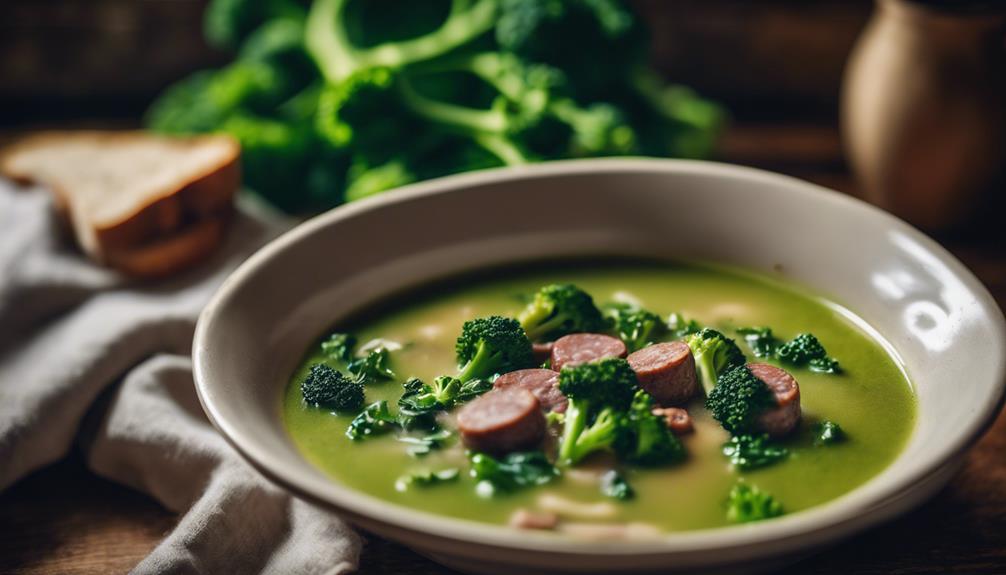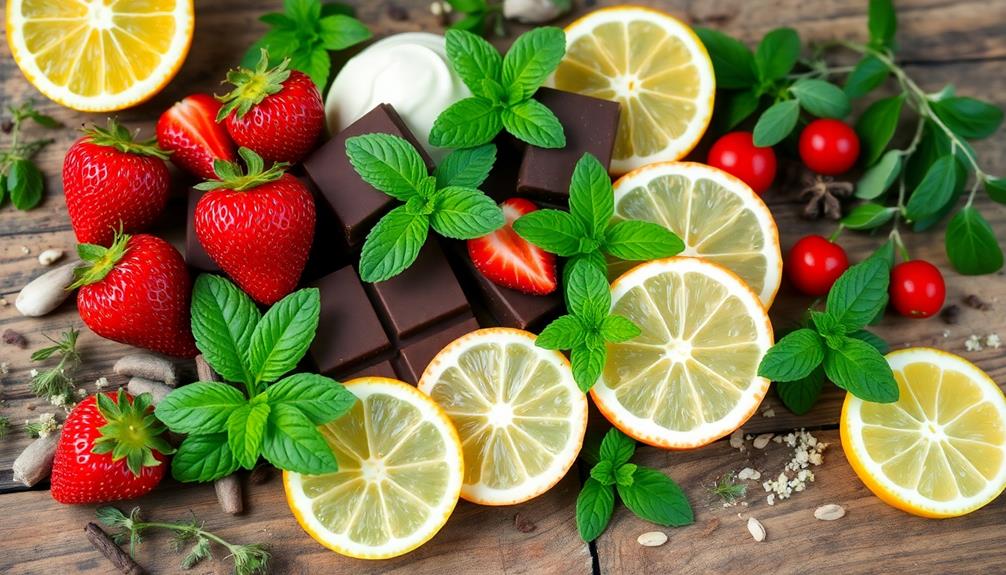

Certain flavors work well together because they engage your senses in unique ways. Aroma plays a huge role, accounting for about 80% of what you taste. When you combine ingredients with shared aromatic compounds, you enhance their flavor profiles. For example, coffee and chocolate create a delightful synergy. Balancing the primary tastes—sweet, salty, bitter, sour, and umami—also contributes to a harmonious experience. Cultural influences shape how flavors are paired, adding exciting dimensions to your palate. If you're curious about more innovative combinations and how to achieve balance, there's plenty more to explore.
Key Takeaways
- Shared volatile compounds in ingredients create flavor synergy, enhancing overall taste experiences.
- Cultural influences shape flavor preferences, leading to familiar and harmonious combinations.
- Complementary flavors, like coffee and chocolate, enhance each other's profiles when paired together.
- Balancing primary tastes, such as sweet and salty, contributes to a well-rounded flavor experience.
- Experimentation with unconventional pairings can yield innovative and delightful flavor discoveries.

McCormick Cake Batter Flavor, 2 fl oz
- Flavor Change: Vanilla Butter & Nut to Cake Batter
- Usage Tip: Whip into frosting for cake flavor
- Baking Tip: Mix with sprinkles for birthday pancakes
As an affiliate, we earn on qualifying purchases.
The Role of Aroma in Flavor

Aroma plays an essential role in the flavor experience, often overshadowing our taste buds' contributions. In fact, aroma accounts for about 80% of what you perceive as taste, while your taste buds and touch only make up 20%. This significant impact shows just how vital aroma is in creating those delightful flavor combinations you enjoy.
For instance, the rich and aromatic profile of dishes like Cumin Lamb showcases how spices can elevate the overall tasting experience. Your olfactory system can distinguish up to 10,000 different odorant molecules, which adds complexity to the flavors you experience.
When you inhale or exhale, you engage in orthonasal and retronasal perception, respectively, both of which enhance the way you taste food. Take coffee, for example; it boasts over 1,000 aromatic compounds, illustrating how a rich aromatic profile can elevate its flavor.
Try pinching your nose while tasting coffee, and you'll notice how the flavor diminishes, highlighting the essential role aroma plays. So, when you're exploring different flavor combinations, remember that the aromas can often be the unsung heroes, contributing immensely to your overall enjoyment.
Embrace the aromas, and you'll discover a whole new depth to your culinary experiences.
Distinction Between Aroma and Taste
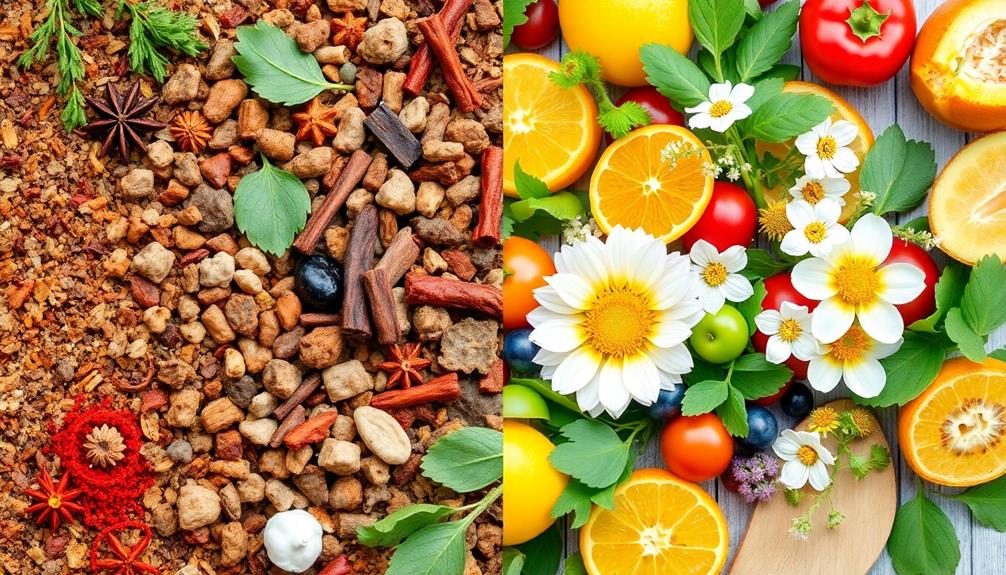
Often overlooked, the distinction between aroma and taste is essential for understanding how we perceive flavors. Taste is detected through your taste buds, categorized into five basic flavors: sweet, salty, bitter, sour, and umami. In contrast, aroma is sensed through your olfactory system and greatly enhances the overall flavor experience. In fact, about 80% of what you perceive as flavor actually comes from your sense of smell.
To illustrate the differences, consider the following table:
| Aspect | Taste | Aroma |
|---|---|---|
| Detection | Taste buds | Olfactory system |
| Types | Sweet, salty, bitter, sour, umami | Complex compounds |
| Impact | Basic flavor identification | Enhances flavor perception |
While taste can indicate basic flavors, it doesn't determine if two ingredients will pair well. For example, pinching your nose while eating can diminish flavor perception, showcasing how critical aroma is to the overall experience. Understanding this distinction allows you to appreciate the intricate dance of taste and aroma in culinary creations.
Mechanisms of Aromatic Pairings
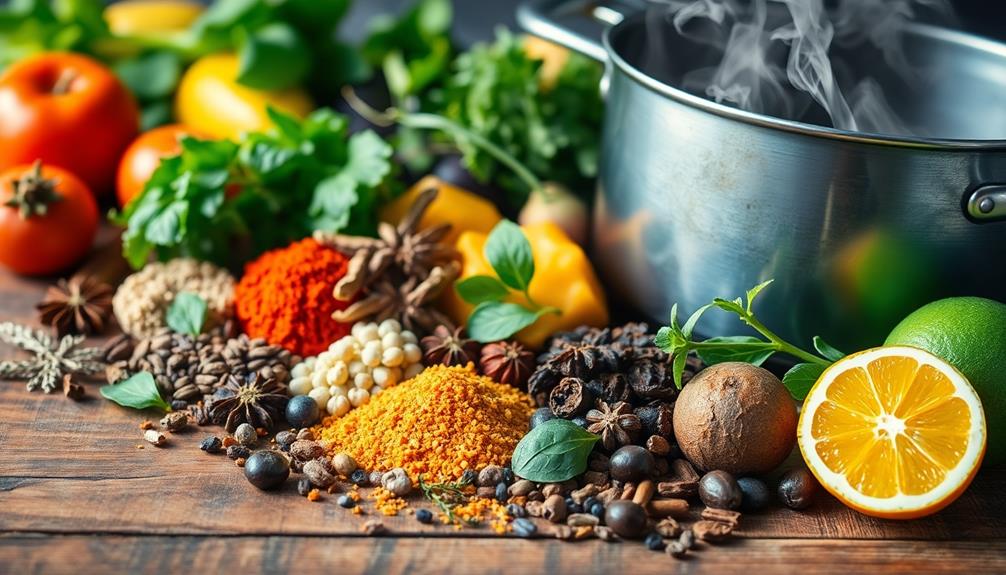
Understanding the mechanisms behind aromatic pairings can elevate your culinary creations. When you grasp how chemical compounds interact, you're better equipped to create harmonious dishes.
For instance, Brazilian cuisine showcases a range of unique flavor combinations, such as the fusion of spices and ingredients influenced by African Heritage. Aromatic pairings often thrive on shared volatile compounds, enhancing flavor synergy.
Here's how you can leverage this knowledge:
- Shared Compounds: Look for ingredients that share key aroma components, like chocolate and coffee, both rich in pyrazines.
- Flavor Profiles: Use tools like the Foodpairing® database, which analyzes over 1,700 ingredients to reveal their aromatic profiles via gas chromatography mass spectrometry (GC-MS).
- Molecular Gastronomy: Explore how functional groups within flavor compounds affect their interactions. This science can inform your culinary decisions.
- Experimentation: Don't hesitate to experiment with unexpected combinations. Sometimes, breaking conventional pairings leads to delightful discoveries.
Balancing Flavors in Recipes
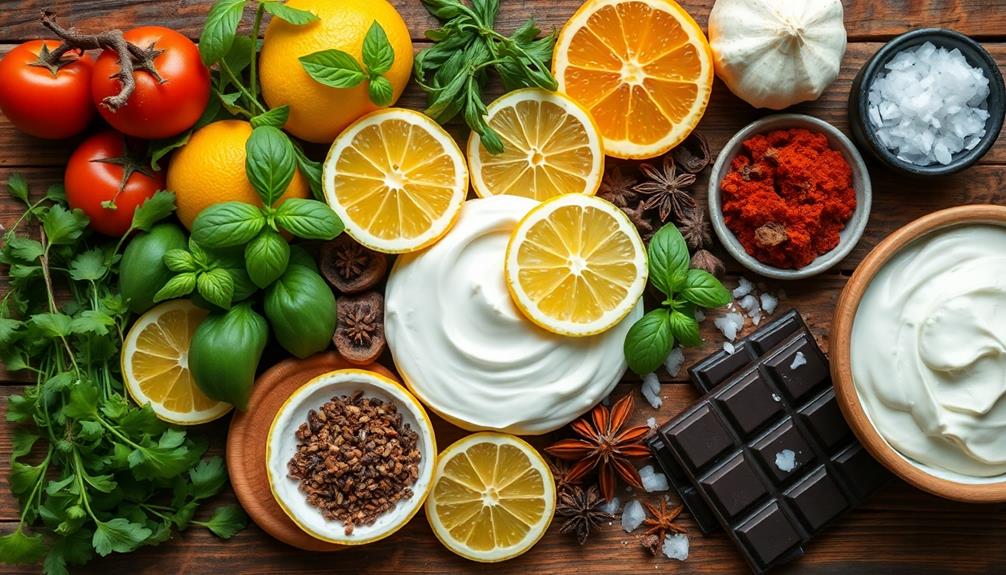
Balancing flavors in recipes is essential for creating dishes that delight the palate. To achieve this, you need to understand the interplay of primary tastes: sweet, salty, bitter, sour, and umami. For instance, pairing sweet with salty can enhance overall flavor perception, making your dish more enjoyable.
In Mexican cuisine, flavors are often balanced through the use of rich ingredients like creamy crema and zesty salsas that complement the corn-based elements. Embrace the Gestalt approach by considering both complementary flavors like coffee and chocolate, as well as contrasting flavors such as duck and blueberries. This creates depth and intrigue in your meals.
Incorporating textures, like adding a crunchy element to a soft dish, not only enhances the sensory experience but also helps in balancing flavors. Pay attention to aromatic profiles; shared volatile compounds between ingredients can lead to innovative and harmonious flavor pairings. This understanding allows you to experiment while ensuring that the dish remains balanced.
Ultimately, balancing flavors isn't just about taste; it's about creating an experience. By considering these elements, you can craft dishes that resonate with your audience, making each bite a delightful journey.
Cultural Influences on Flavor Combinations
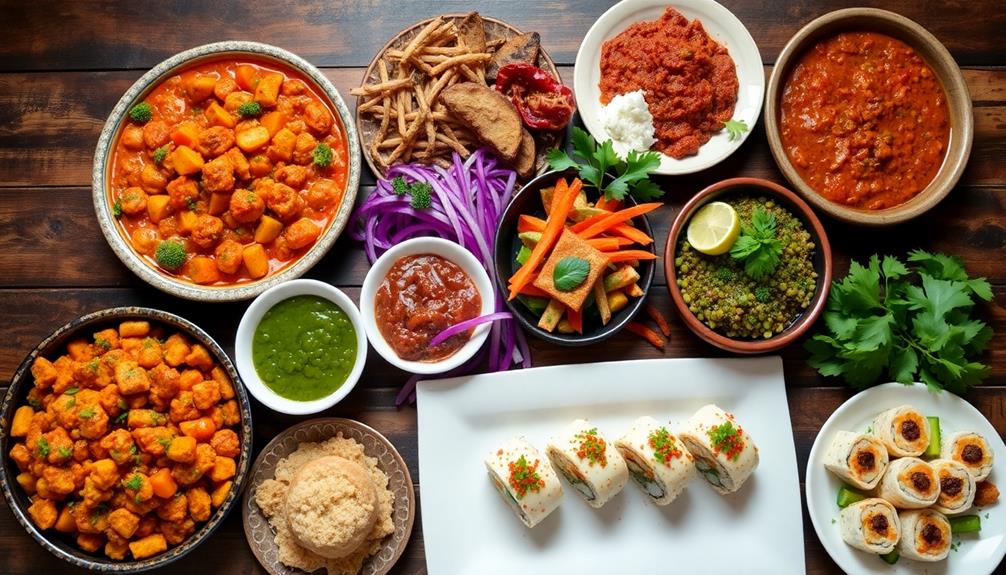
Cultural influences play a significant role in shaping flavor combinations across the globe. Your culinary experiences are often guided by historical trade routes, agricultural practices, and societal norms.
For example, traditional Indonesian desserts like Kue Putu showcase how local ingredients such as coconut and palm sugar create harmonious flavor profiles. These elements create distinct food pairings that resonate within specific cultures.
Here are four key factors that highlight this connection:
- Historical Trade Routes: Ingredients introduced through trade have led to unique regional cuisines and their characteristic flavor combinations.
- Agricultural Synergy: The adage "what grows together, goes together" illustrates how ingredients from similar climates often complement each other in flavor pairings.
- Cultural Norms: Repeated exposure to certain combos, like peanut butter and jelly, fosters strong preferences and defines what's deemed delicious within a culture.
- Southeast Asian Influence: This cuisine showcases a balance of spicy, sweet, sour, and salty, reflecting how cultural practices dictate acceptable flavor combinations.
Additionally, fusion cuisine encourages innovative pairings, blending distinct flavor profiles from different cultures.
Frequently Asked Questions
How to Know What Flavors Go Well Together?
To know what flavors go well together, experiment with different combinations, trust your palate, and consult resources like "The Flavor Bible." Observing culinary traditions can also help you discover popular and harmonious pairings.
What Is the Flavor Pairing Theory?
Flavor pairing theory focuses on finding fantastic food friends based on shared compounds. You'll discover delicious duos, enhancing your culinary creativity as you explore aromatic affinities and experiment with surprising combinations to elevate your dishes.
How Do the Flavours Support Each Other?
Flavors support each other by enhancing your sensory experience. When you combine sweet and sour, for example, or pair contrasting textures, you create a more enjoyable dish that excites your palate and keeps you engaged.
What Flavors Counteract Each Other?
Imagine a dance of flavors—sweetness twirls with bitterness, while acidity cuts through richness. Salt elevates dessert's charm, and spice finds relief in creamy embrace, creating a symphony where contrasting notes harmonize beautifully on your palate.
Conclusion
To sum up, understanding why certain flavors work well together enriches your culinary experience. Did you know that about 80% of what you taste comes from your sense of smell? This highlights the importance of aroma in flavor pairings. By exploring aromatic combinations and balancing flavors, you can elevate your dishes and truly delight your palate. So, next time you cook, pay attention to those scents—your taste buds will thank you!